
YC SP.#026Squash · 2026.10.09
Why you get to the ball with a lunge but are so slow back to the T
The graphics in this post are in Chinese. The text below is an English translation.
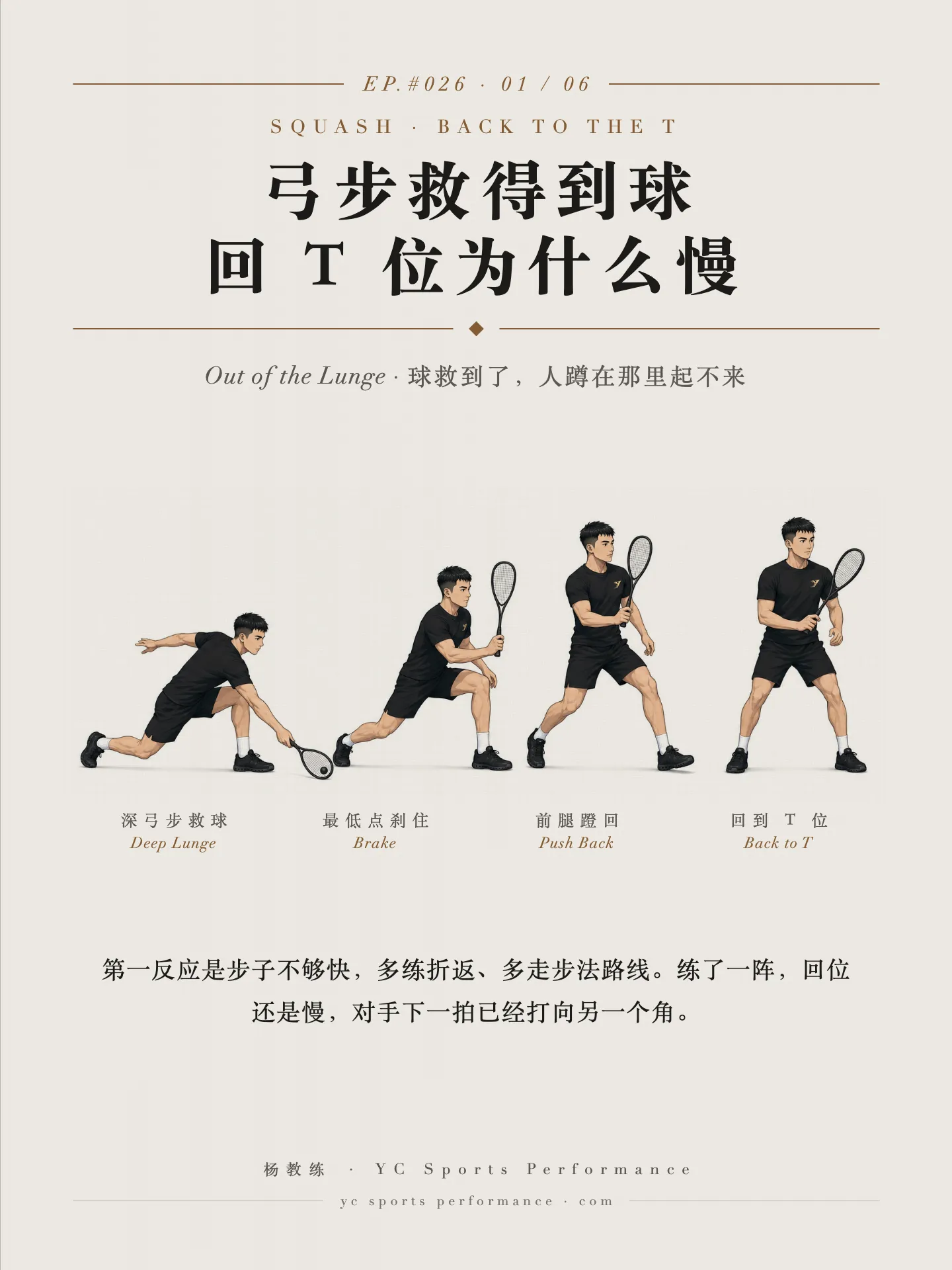
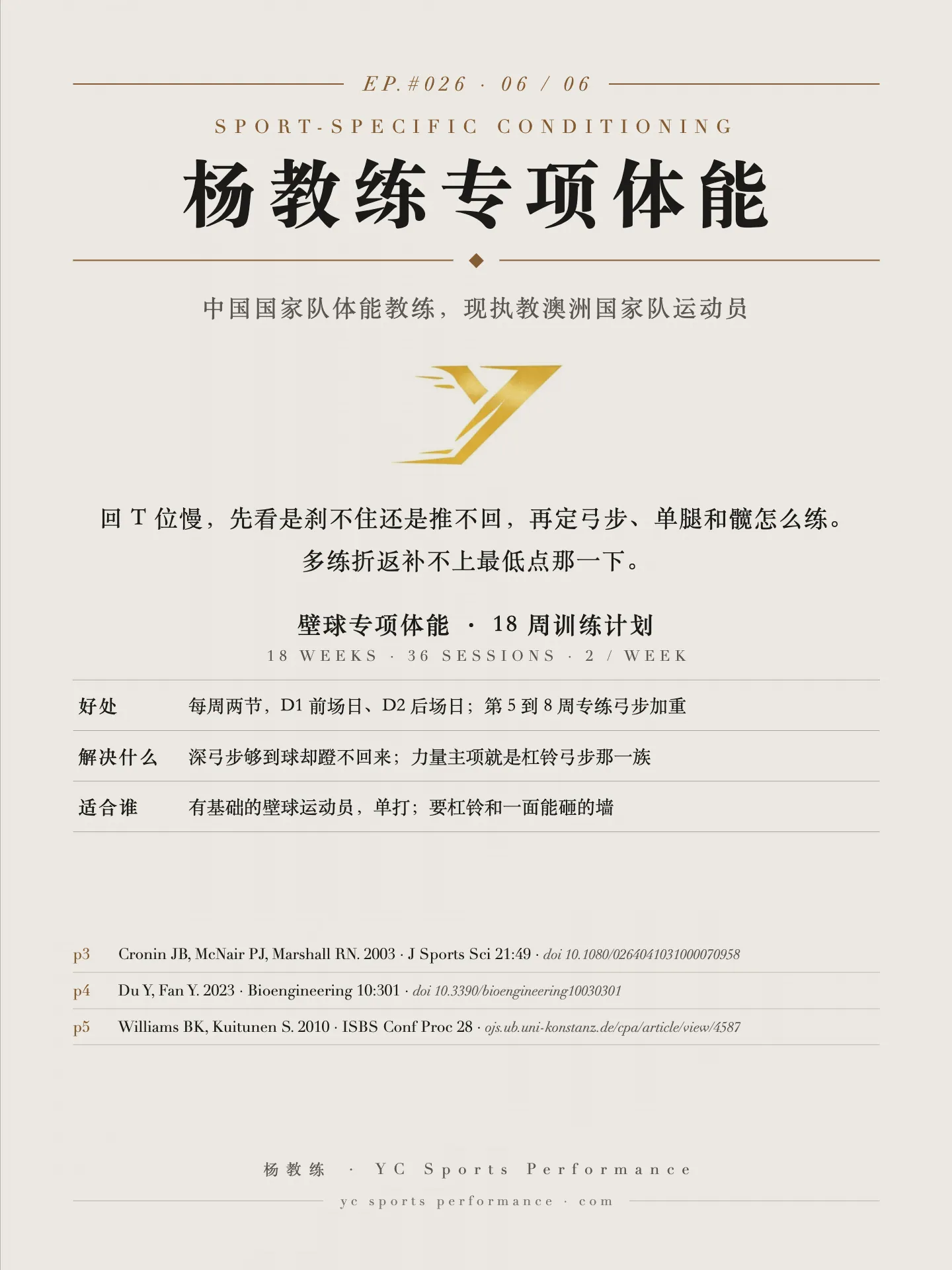
Plenty of squash players know this: a low ball into the front corner, you stretch into a deep lunge and get it back, but then you're stuck down there and can't get up. By the time you're back on the T, your opponent's next shot is already heading to another corner. The first reaction is that your footwork isn't quick enough, so you do more shuttles and more movement drills. After a while, you're still slow getting back. Why?
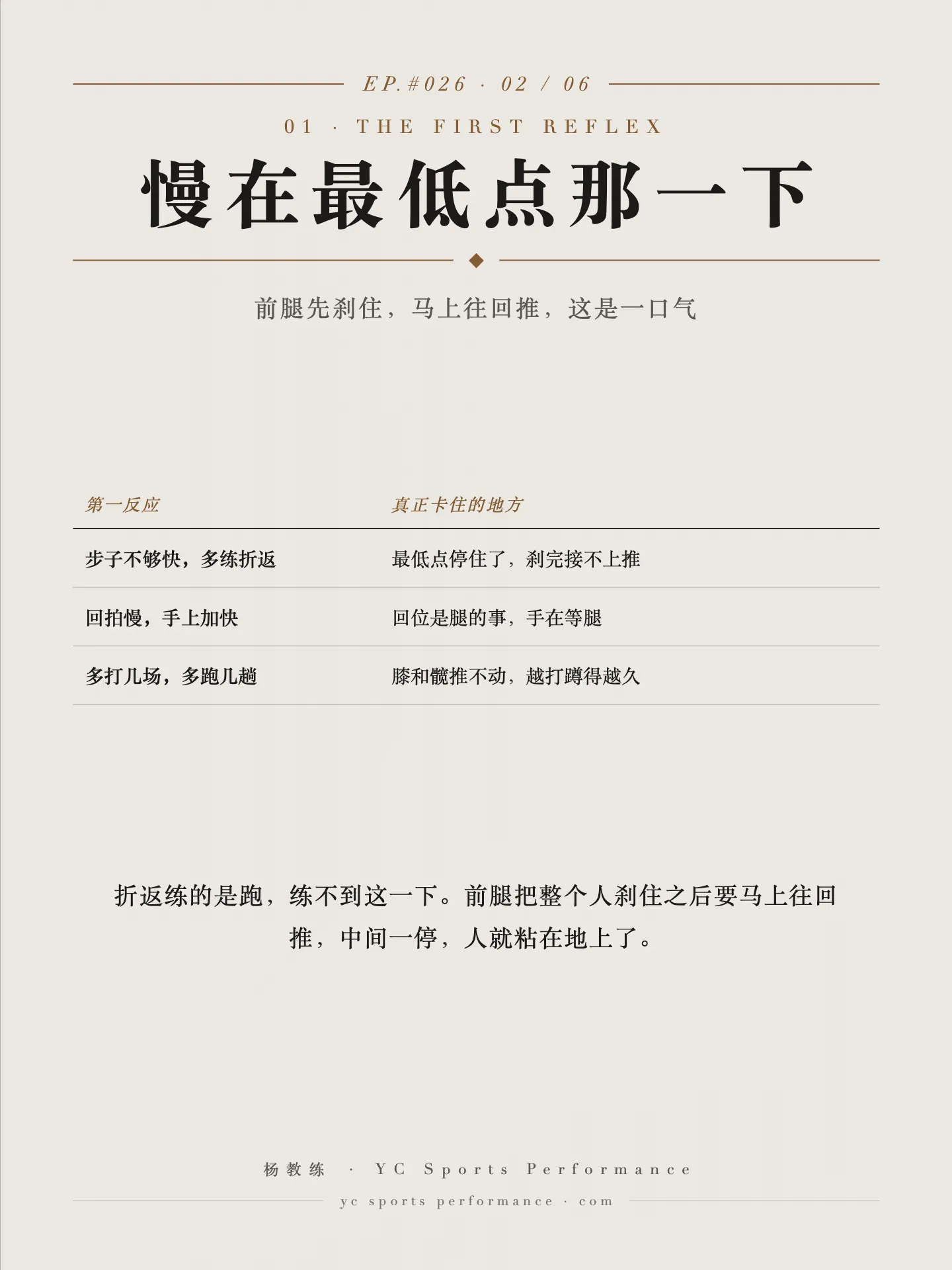
Because the slowness is at the bottom of the lunge. Your front leg first brakes your whole body, then immediately pushes back – braking and pushing are one continuous action, and if you pause in between, you're stuck to the floor. Shuttles train running; they don't train this moment.
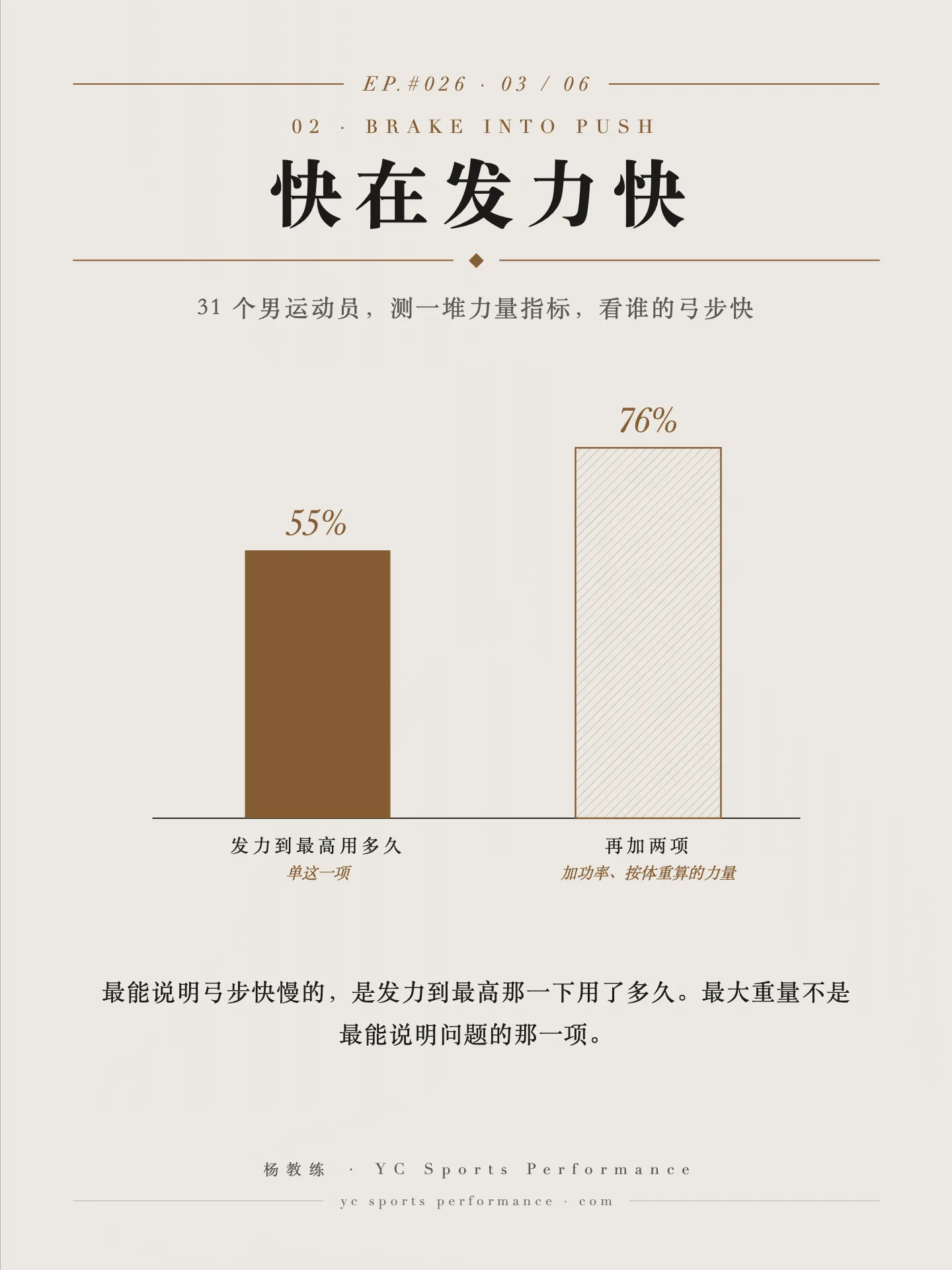
First, where speed comes from. One study measured a range of strength qualities in 31 male athletes to see who performed a forward lunge fastest. The best predictor was time to peak force – this alone explained 55%, and adding power and relative strength took it to 76%. Maximal load wasn't the measure that explained the most.
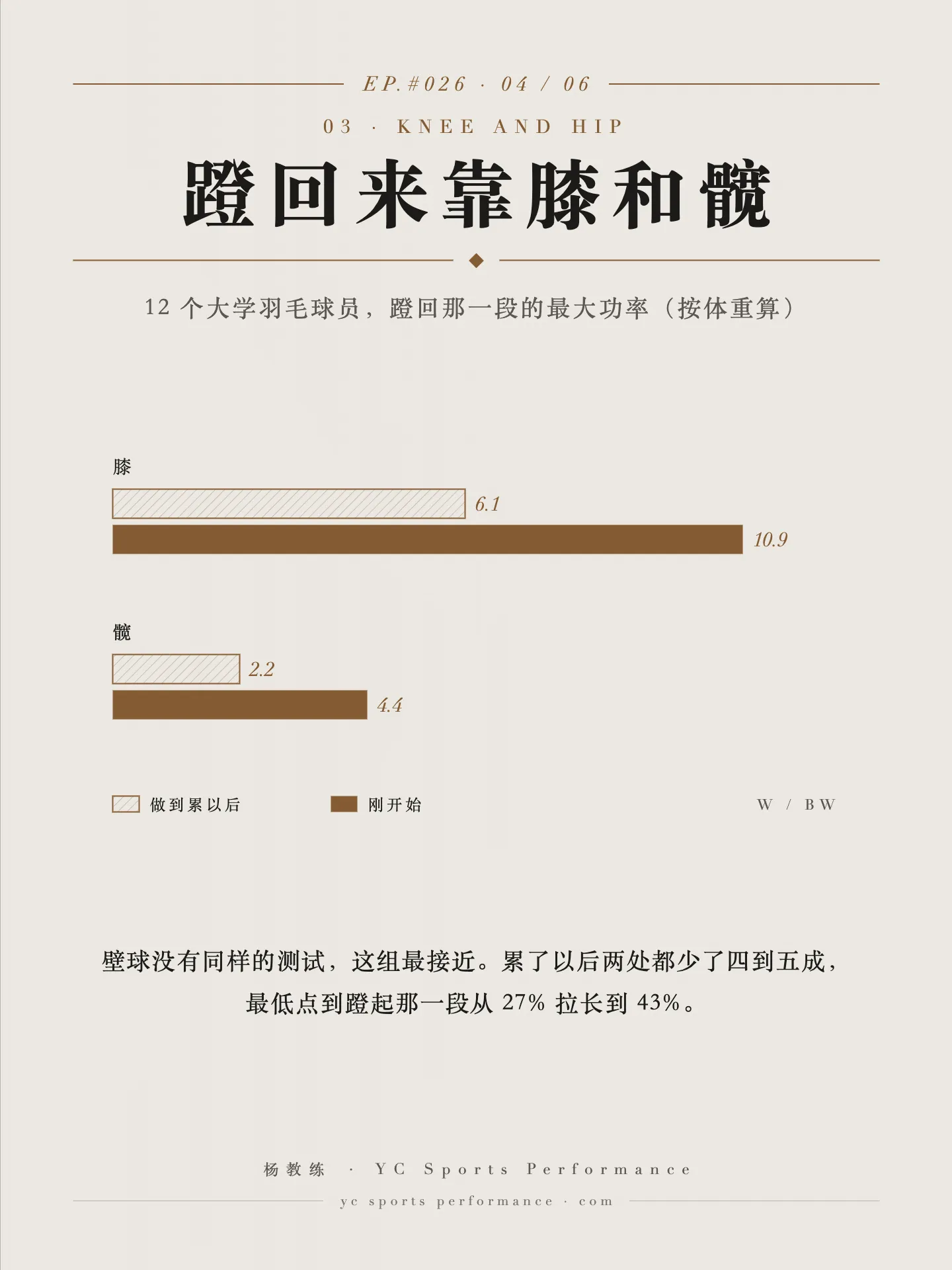
Next, what you push back with. In a study of 12 university badminton players doing forward lunges (there is no equivalent test for squash), power in the push-back phase, relative to body weight, was 10.9 at the knee and 4.4 at the hip. After repeated lunges to fatigue, the knee dropped to 6.1 and the hip to 2.2 – both down by 40% to 50%. The phase from maximum knee bend to actually driving back up grew from 27% to 43% of ground contact time. That's how you get stuck at the bottom.
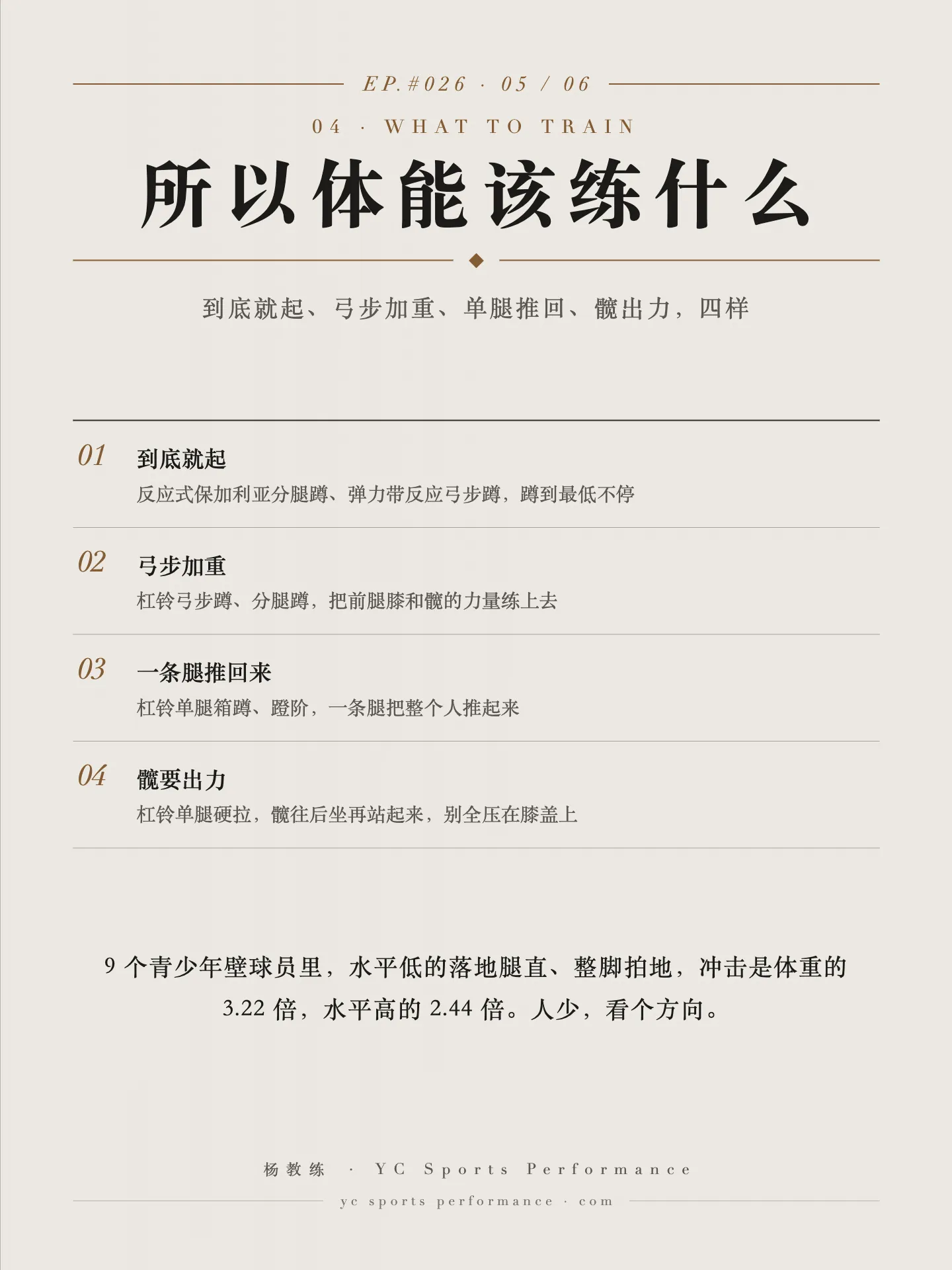
So what should you train? Four things.
Up as soon as you hit the bottom: reactive Bulgarian split squats and band-resisted reactive lunges – no pause at the bottom.
Loaded lunges: barbell lunges and split squats to build knee and hip strength in the front leg.
Pushing back on one leg: barbell single-leg box squats and step-ups.
Make the hip work: barbell single-leg deadlifts, so the load isn't all on the knee.
In the lunge, keep your knee tracking over your toes – never let it cave inwards. This is key.
After retrieving a front-corner ball, do you push straight back, or do you stay down there a moment too long? Tell me in the comments.
Back to all daily posts