
YC SP.#021Basketball · 2026.09.29
Why a quick first step still doesn't get you past your defender
The graphics in this post are in Chinese. The text below is an English translation.
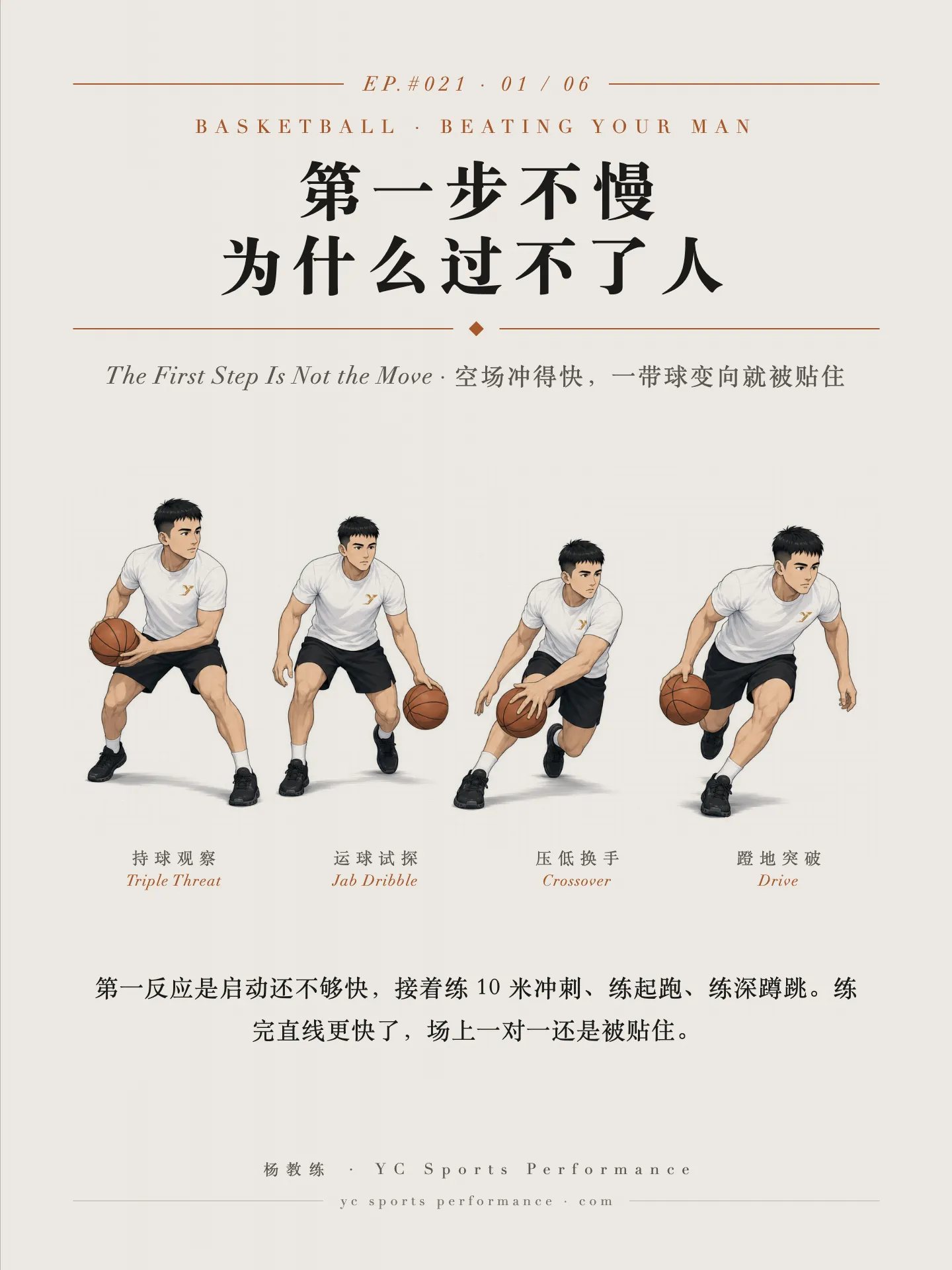
Plenty of basketball players know this: your first step isn't actually slow, and your sprint times on an empty court are decent, but in a one-on-one, you dribble and fake and the defender is still right on you. The usual first reaction is that your acceleration still isn't quick enough, so you keep working on 10 m sprints and starts. Afterwards you're faster in a straight line, but you still can't get past anyone in a game. Why?
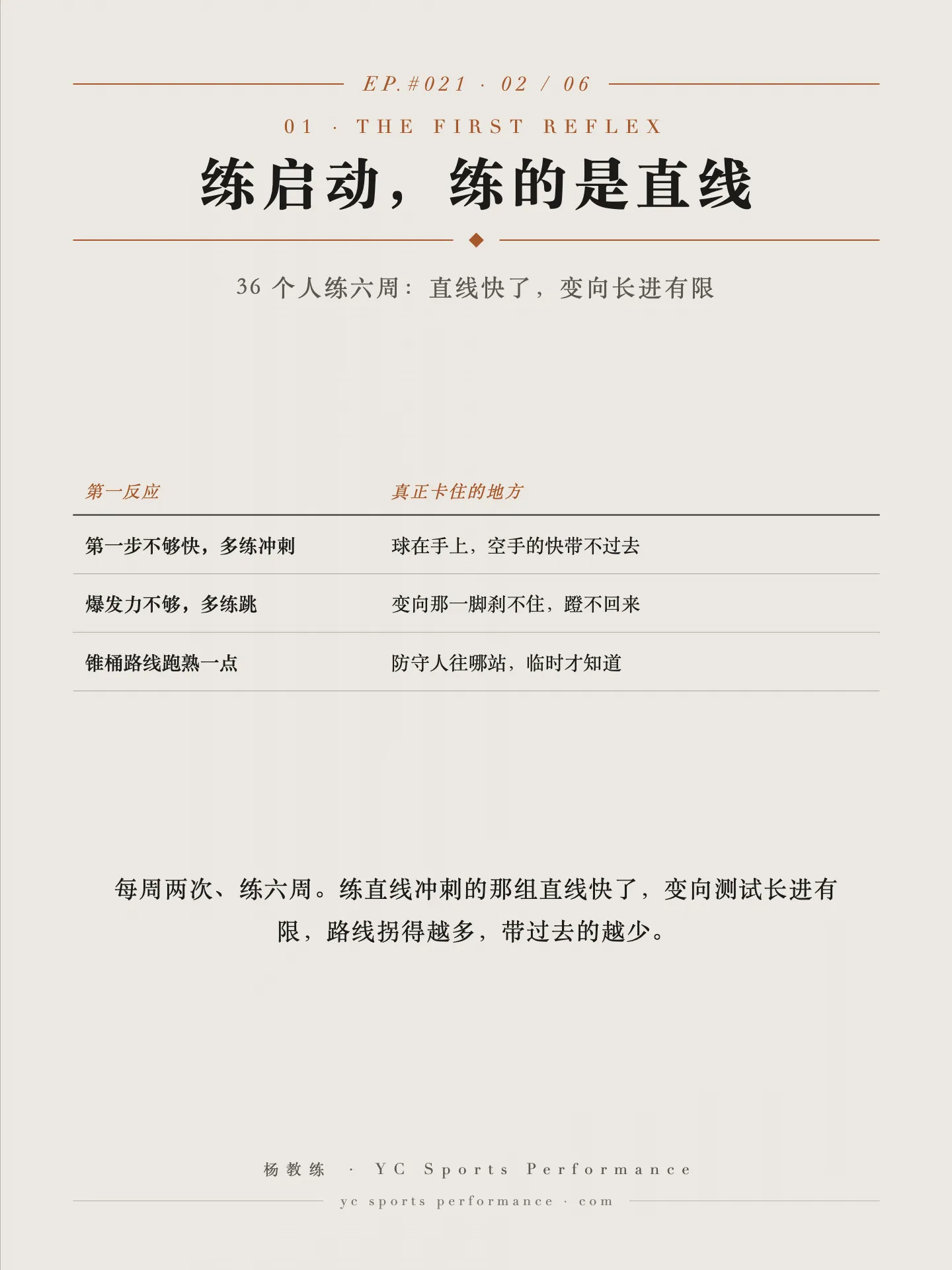
Because acceleration training trains a straight line. In one experiment, 36 people trained twice a week for six weeks: those who did straight-line sprints got faster in a straight line, but improved only a little on change-of-direction tests – the more turns in the course, the less carried over.
To beat your defender, you're missing at least three more things.
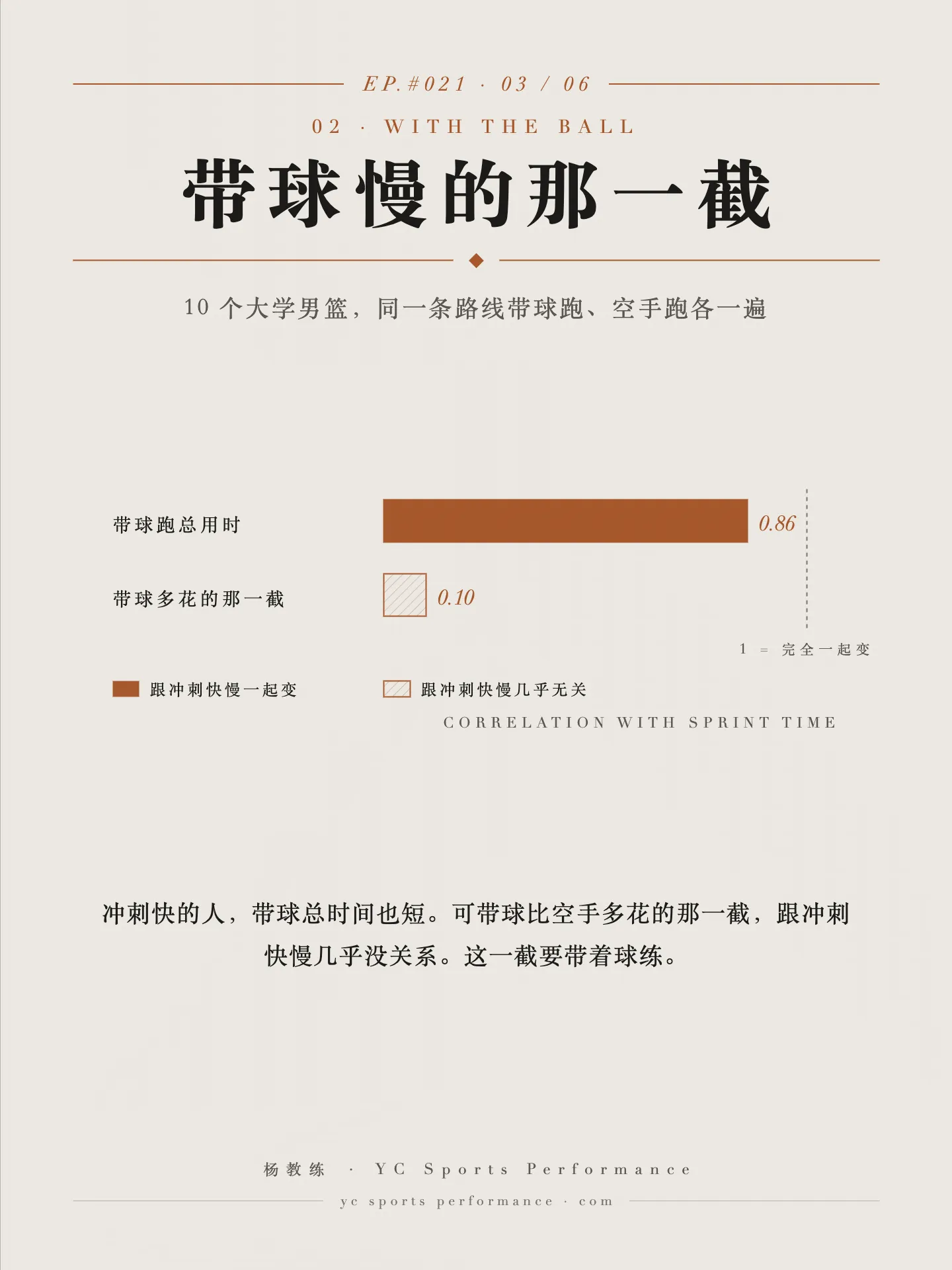
First, the ball. In a study of 10 male college basketball players who ran the same course once dribbling and once without the ball, faster sprinters also had shorter total times with the ball – a correlation of 0.86 (1 means the two move together perfectly, 0 means no relationship). But the extra time taken with the ball compared with without was related to sprint speed at only 0.10. Sprint training won't win back that extra time.
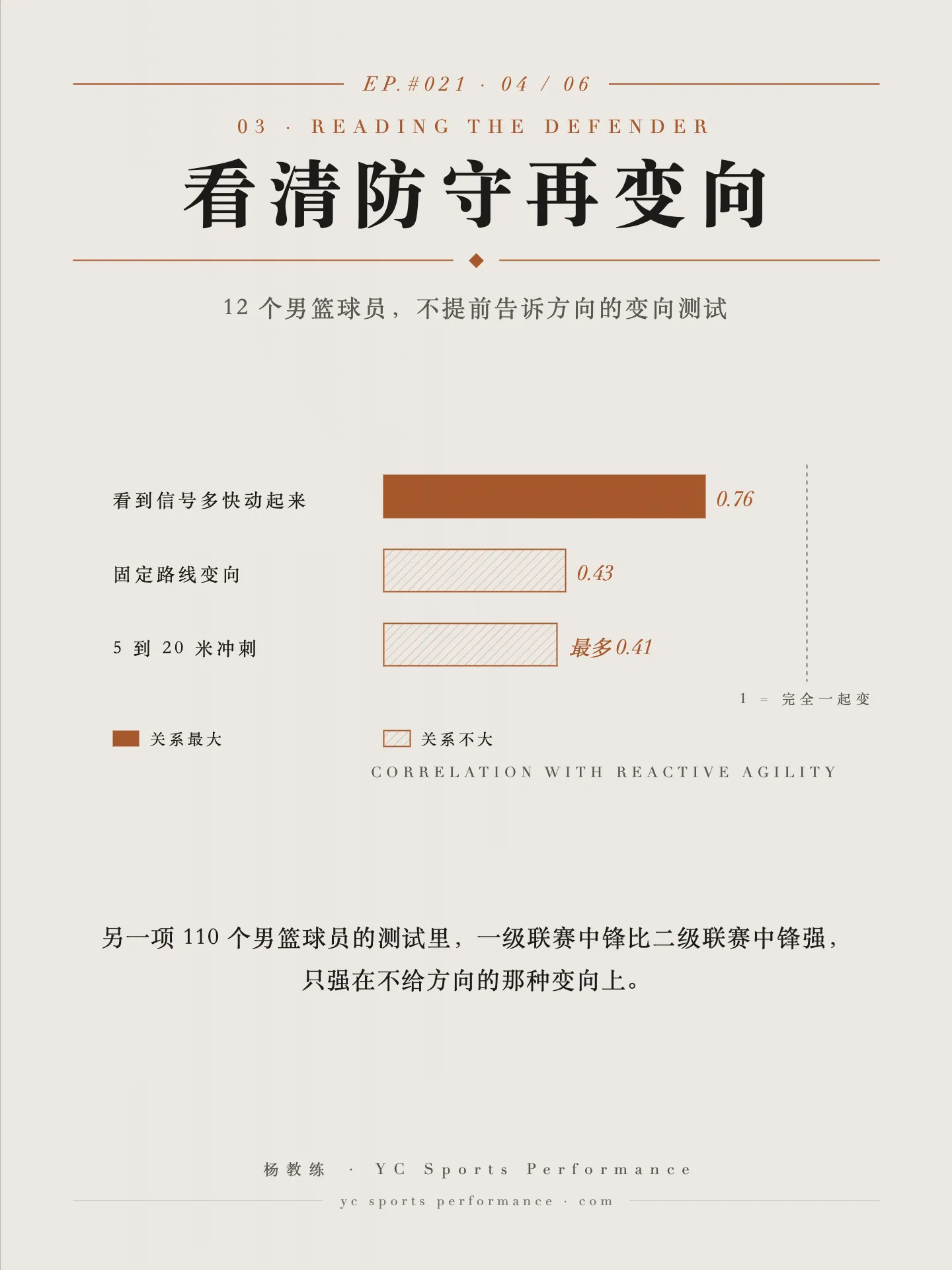
Second, reading the defence. In a study of 12 male basketball players doing a change-of-direction test where the direction wasn't announced in advance, results correlated at most 0.41 with 5 to 20 m sprints and 0.43 with pre-planned change of direction; the strongest relationship was how quickly they started moving after seeing the cue, at 0.76.
Third, braking. On the cutting step you have to stop first before you can push off the other way. Overrun by half a step, and the defender recovers.
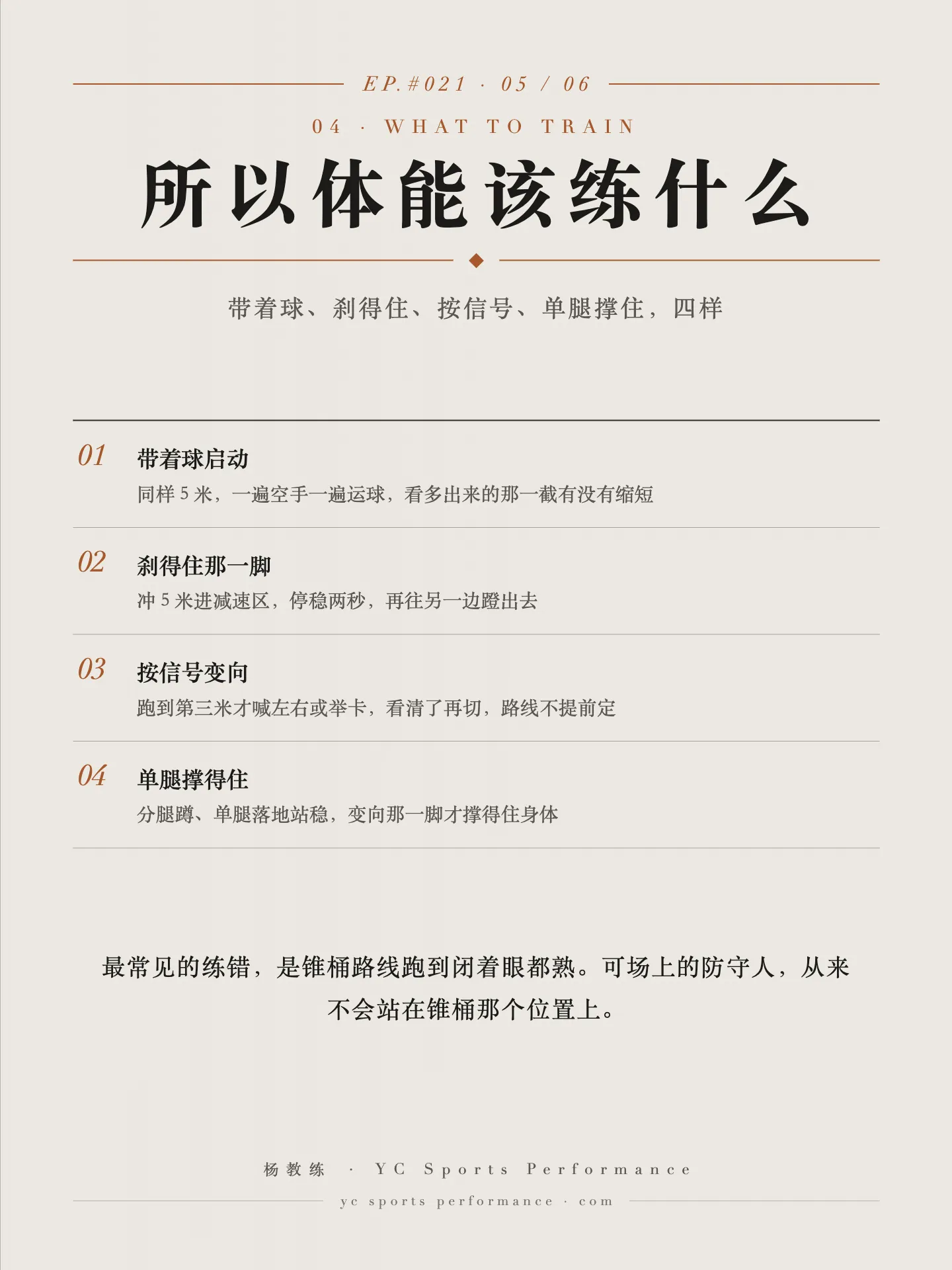
So what should you train? Four things.
Accelerating with the ball: the same 5 m, once without the ball and once dribbling – see whether the extra time gets shorter.
A step that can brake: sprint 5 m into a deceleration zone, hold the stop for two seconds, then push off the other way.
Changing direction on a cue: left or right is called only at the 3 m mark – read it, then cut.
A single leg that holds: split squats and single-leg landings you stick.
The most common mistake is running cone drills until you could do them with your eyes closed. In a game, defenders don't stand where the cones are.
Are you quick on an empty court but slow as soon as you dribble, or can't you read which side the defender is on? Tell me in the comments.
Back to all daily posts