
YC SP.#019Tennis · 2026.09.30
Slow serve: will training only your shoulders and arms help?
The graphics in this post are in Chinese. The text below is an English translation.
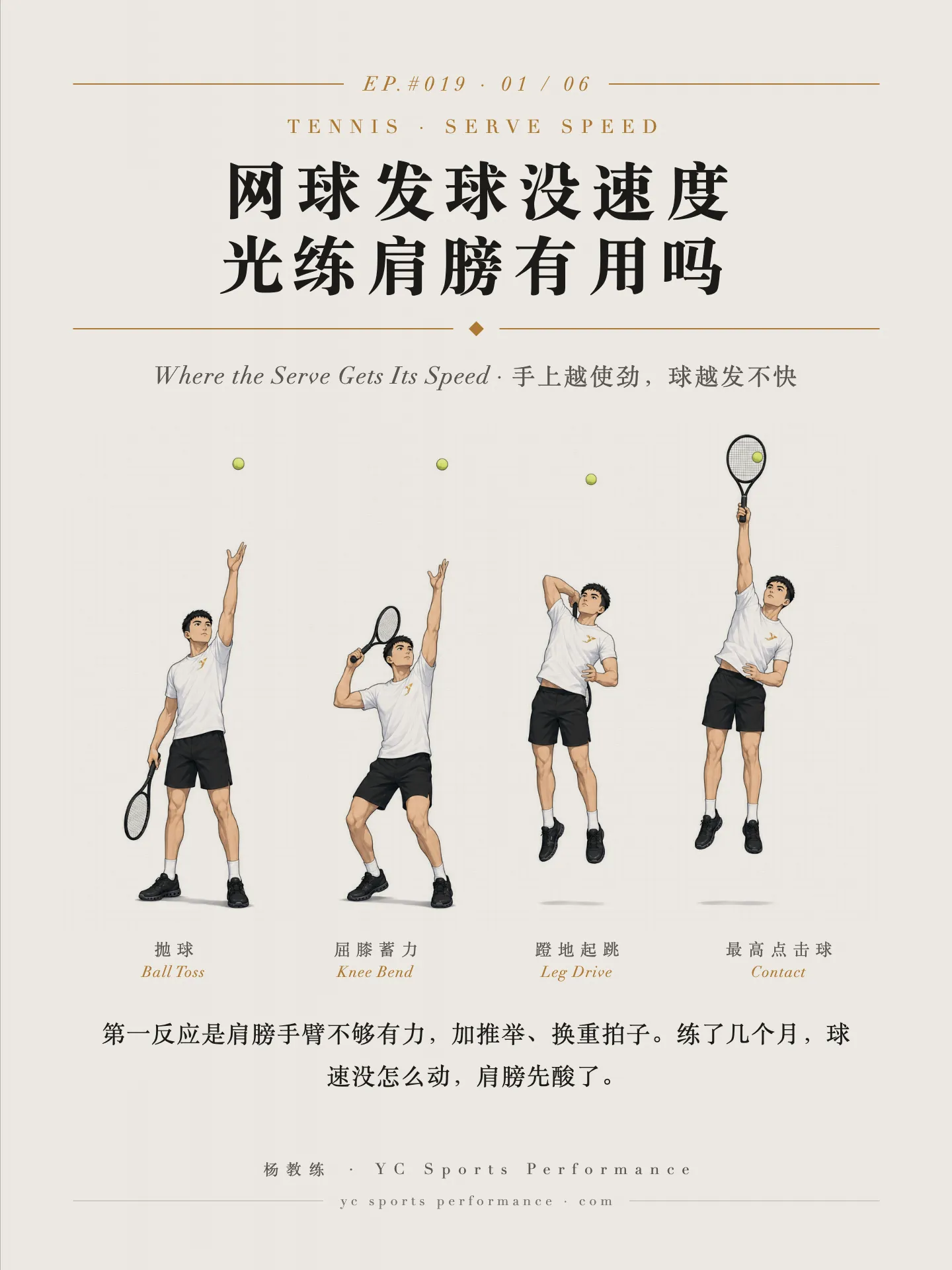
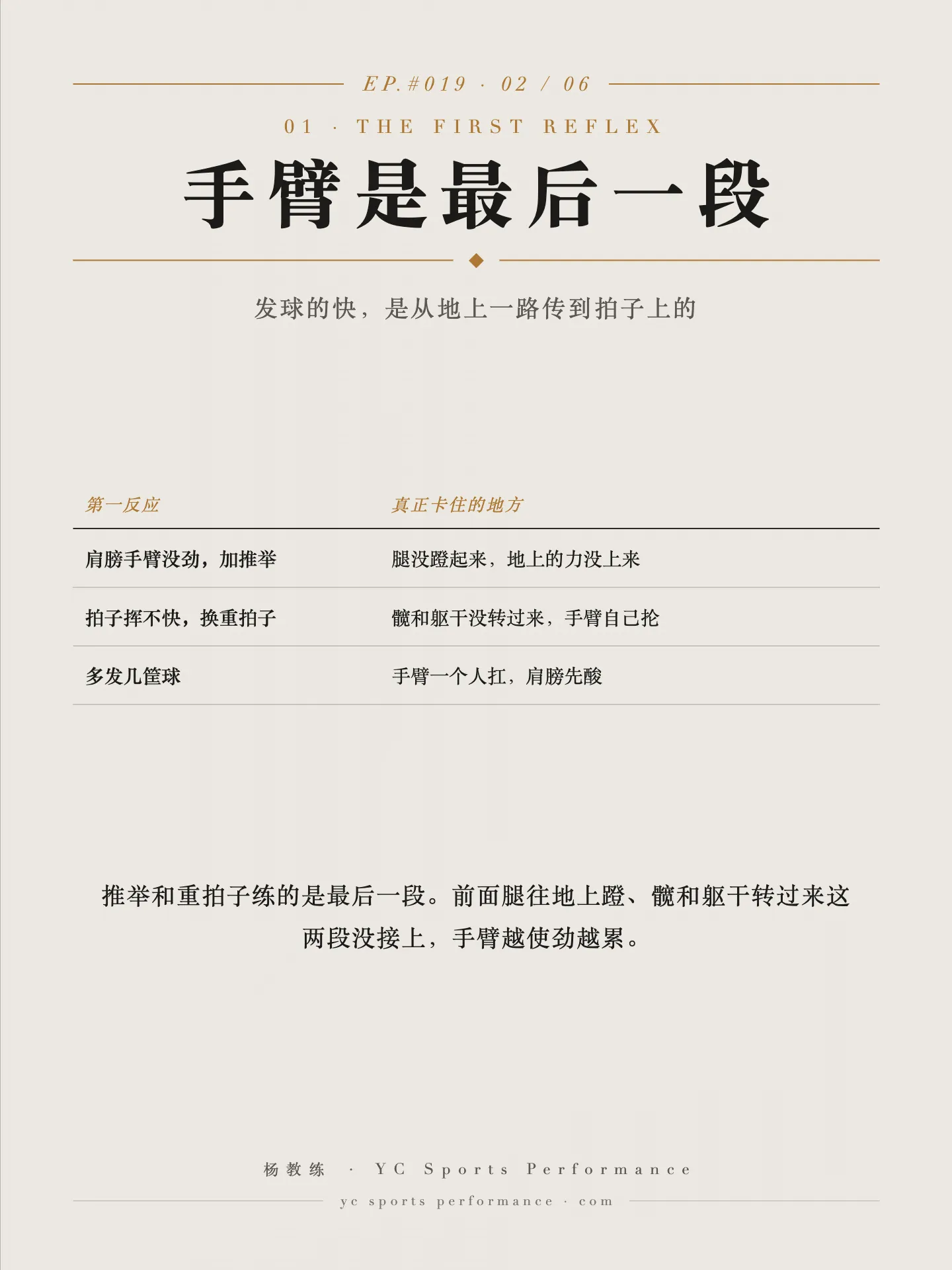
Plenty of tennis players get stuck on the serve: however hard they try, their first serve won't speed up, and the more they want to serve fast, the more they muscle it with the arm. The first reaction is that the shoulders and arms aren't strong enough, so they add overhead presses and switch to a heavier racket. A few months later, serve speed has barely moved, and the shoulder is the first thing to get sore. Why?
Because serve speed doesn't come from the shoulder alone. The arm is the last link; before it come the legs driving into the ground and the hips and trunk rotating through.
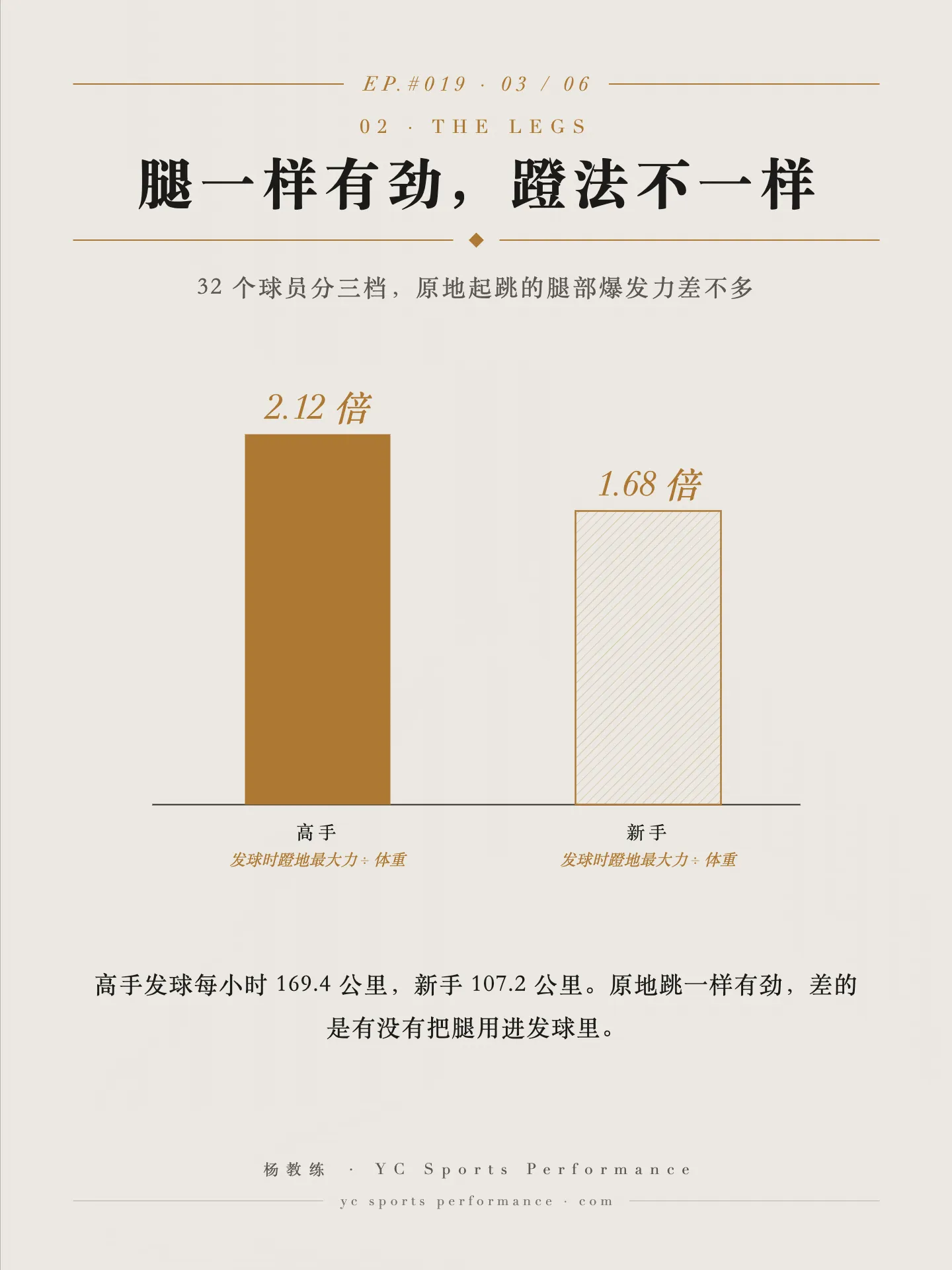
Start with the legs. One study split 32 players into three levels and had them serve on a force plate. Leg power in a standing jump was similar across the three groups, but when serving, the advanced players pushed into the ground with 2.12 times body weight, while the novices managed only 1.68 times. The advanced players served at 169.4 km/h, the novices at 107.2 km/h. Their legs were just as powerful – the difference was whether that power went into the serve.
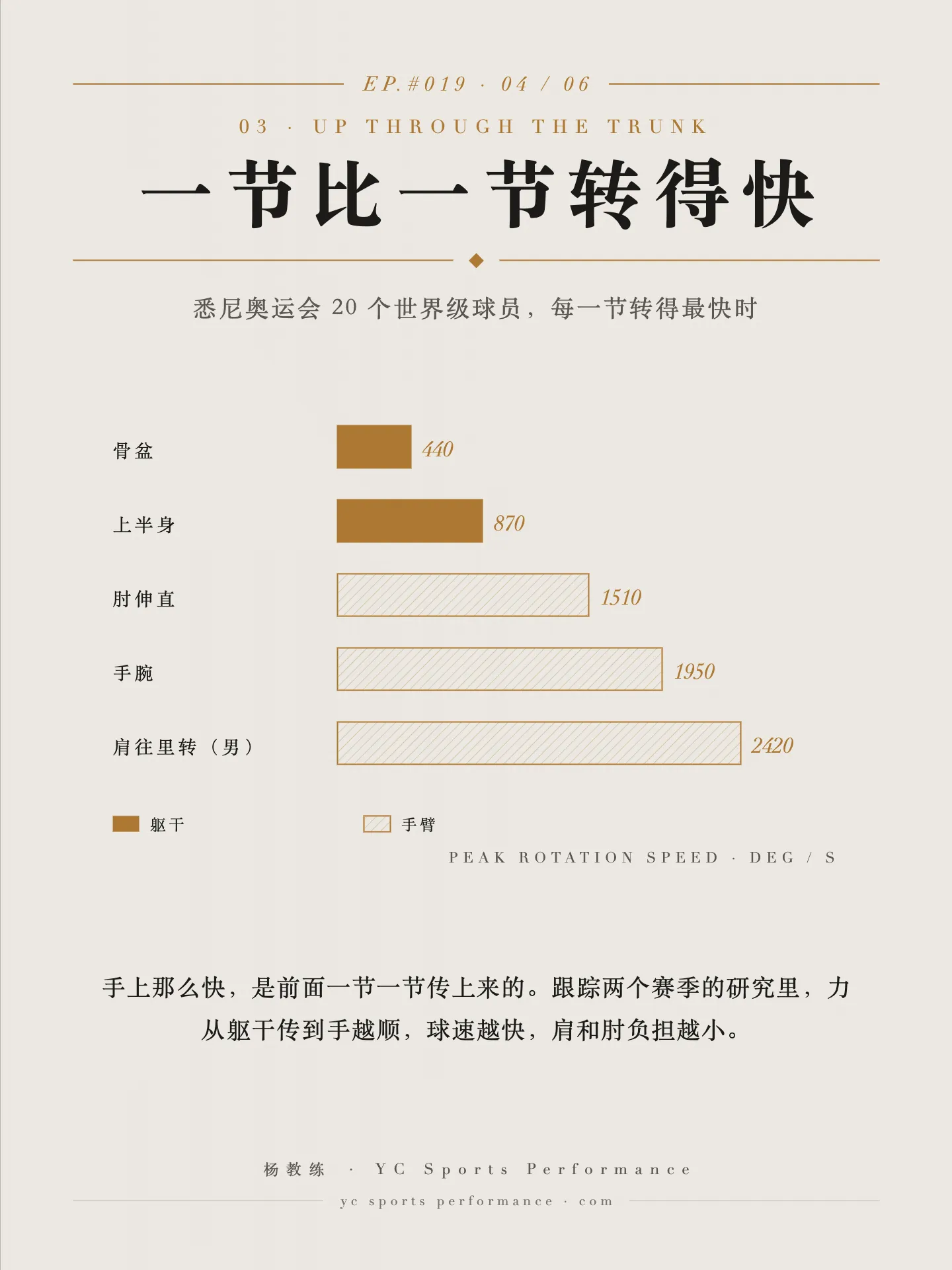
Next, the trunk. In serves by 20 world-class players at the Sydney Olympics, peak pelvis rotation speed was 440 degrees per second, upper trunk 870, elbow 1510 and wrist 1950, and male players' shoulder internal rotation reached 2420 degrees per second. That speed at the hand is passed up, link by link, from the segments before it. Another research group followed players over two seasons: the more smoothly force was transferred from trunk to hand, the faster the serve and the lower the load on the shoulder and elbow.
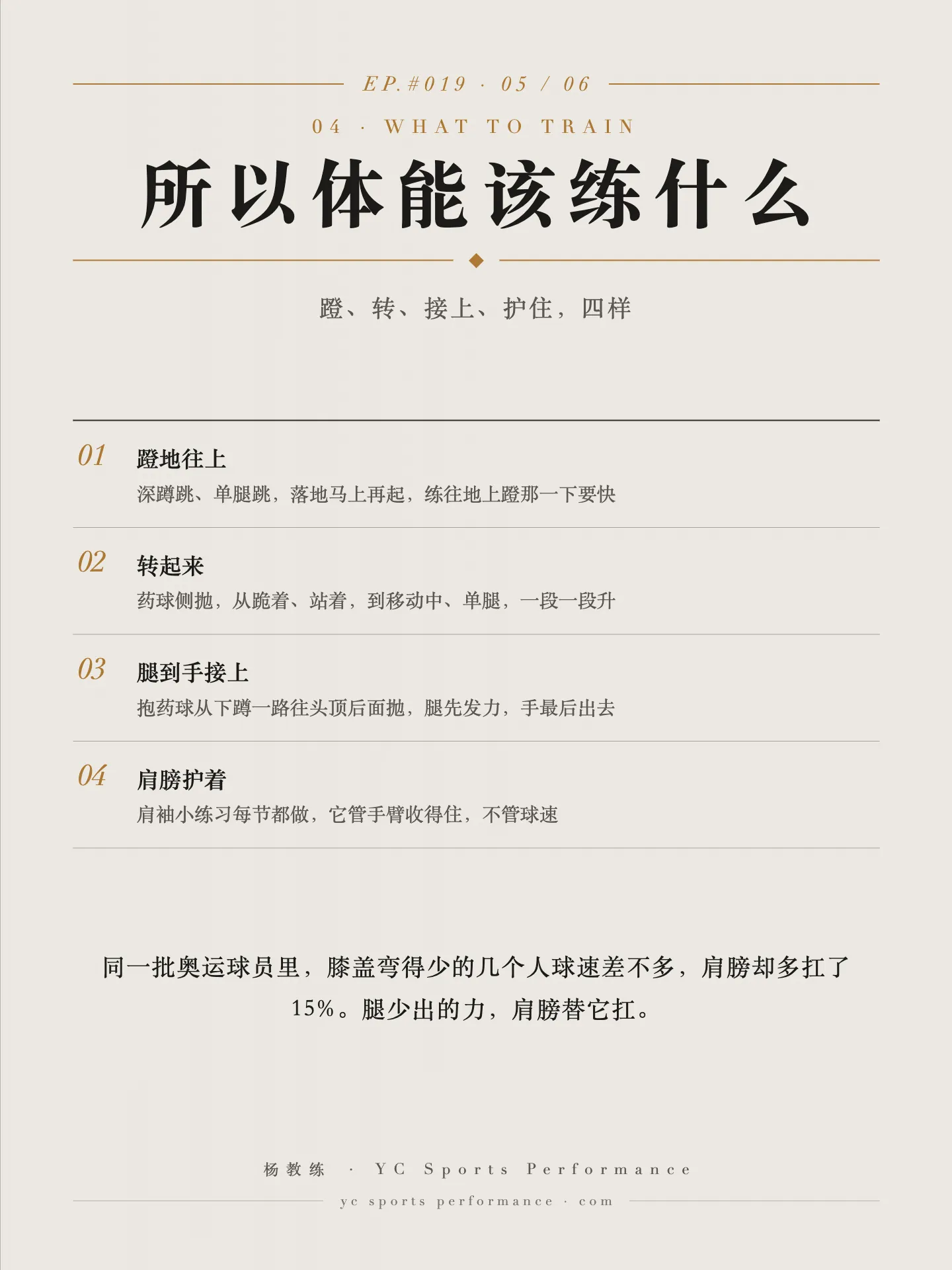
Among the same Olympic players, those who bent their knees only 7.6 degrees in the backswing, compared with those who bent 14.7 degrees, served at similar speeds but had 15% higher peak shoulder internal rotation torque (63.9 vs 55.6 Nm). The force the legs didn't produce, the shoulder took on instead. This is key.
So what should you train? Four things.
Driving up from the ground: squat jumps and single-leg hops – land and go straight back up.
Rotation: medicine ball side throws, progressing from kneeling and standing to moving and single-leg.
Connecting legs to hand: hold a medicine ball and throw it from a squat all the way up and back over your head – legs drive first, hands release last.
Protecting the shoulder: small rotator cuff exercises every session – they help the arm decelerate; they don't drive serve speed.
When you serve, do your legs drive you up, or do you just stand and swing? Tell me in the comments.
Back to all daily posts