
YC SP.#016Tennis · 2026.10.04
Tennis: why you reach the ball but can't get back into position
The graphics in this post are in Chinese. The text below is an English translation.
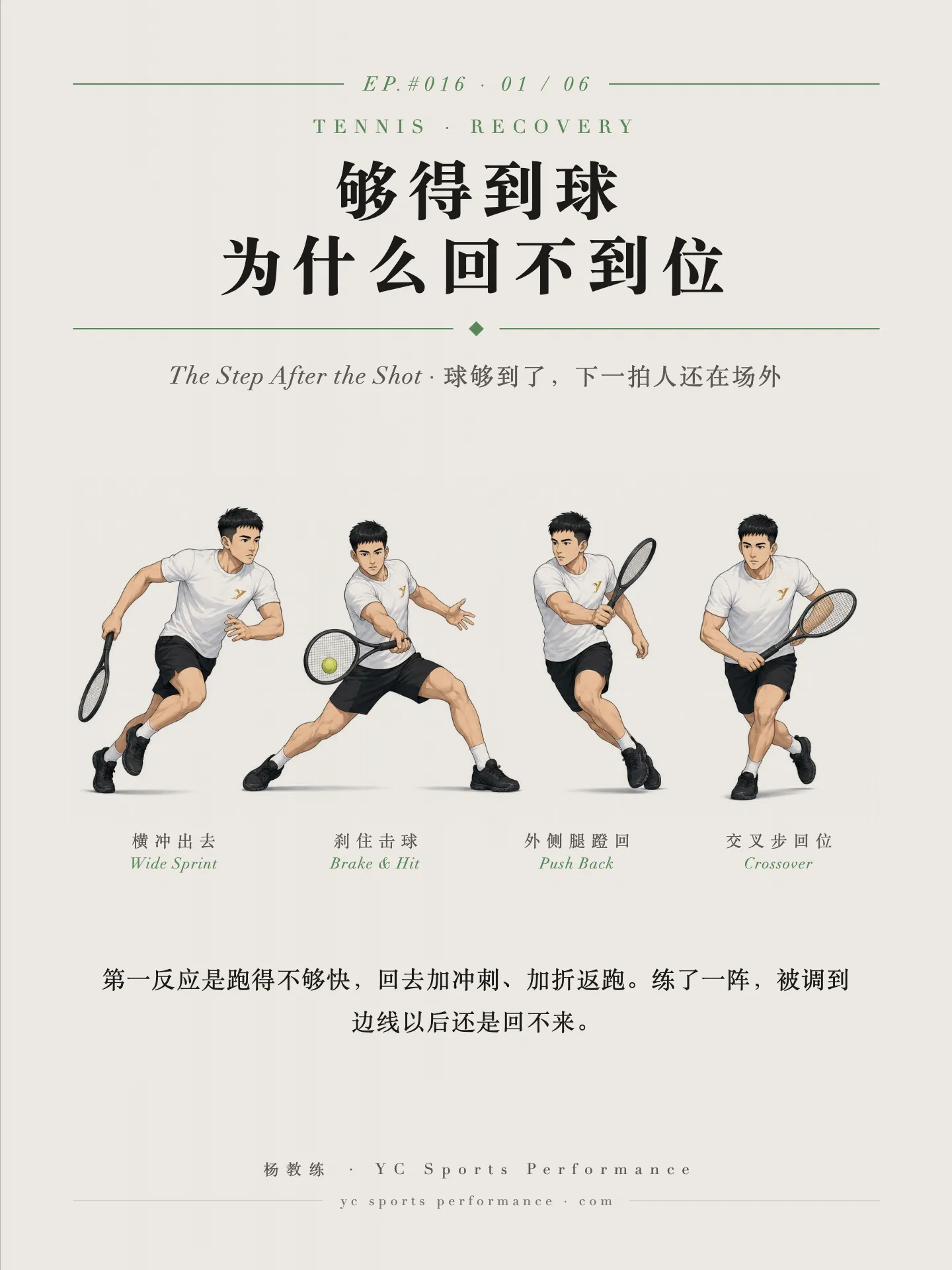
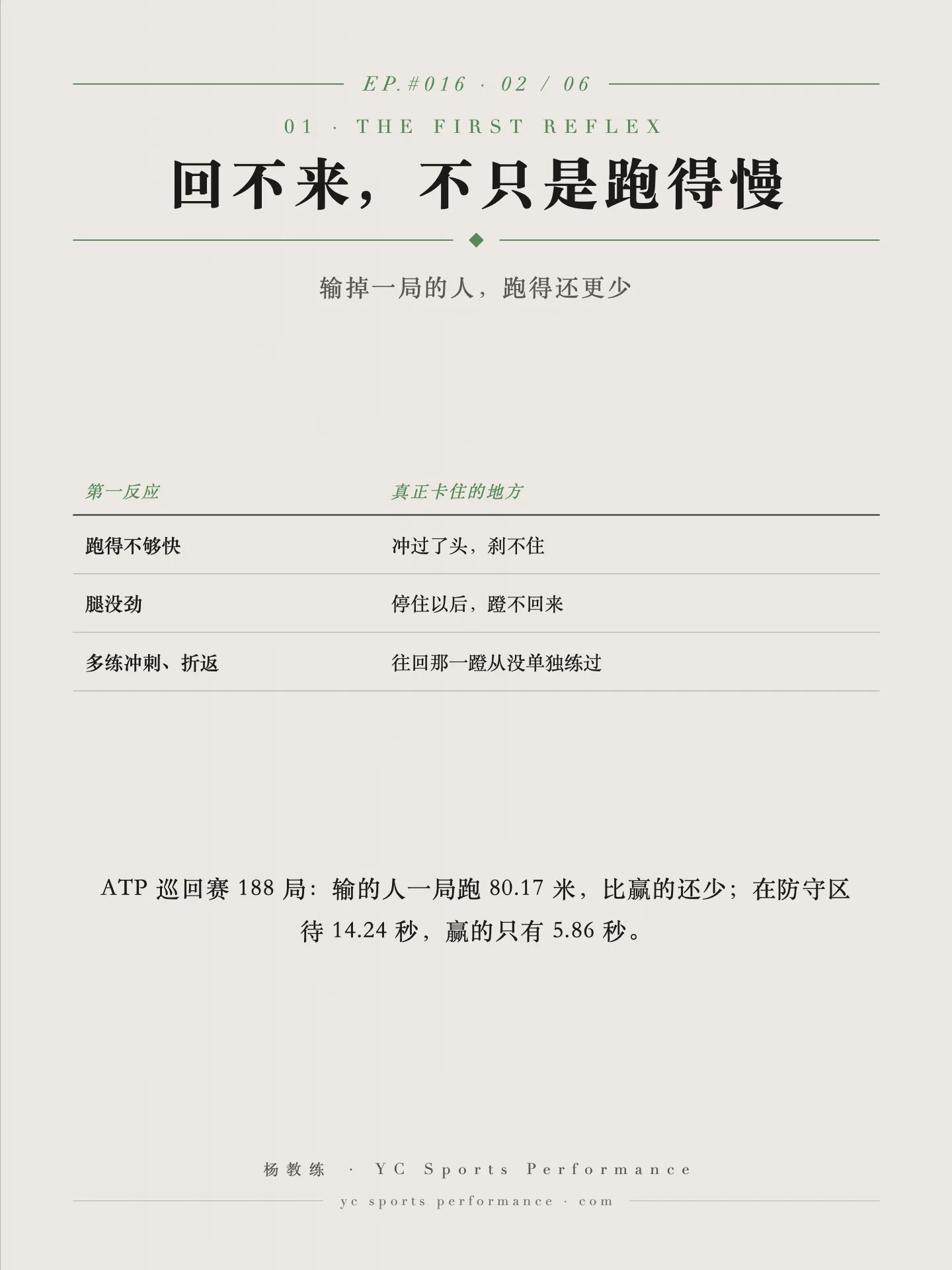
Plenty of tennis players know this feeling: your opponent pulls you out wide past the sideline, you sprint over, reach the ball and get it back. The next shot goes to the other side, and you're still off the court. The usual first reaction is that you're not fast enough, so you add sprints and shuttle runs. After a while, you still can't get back. Why?
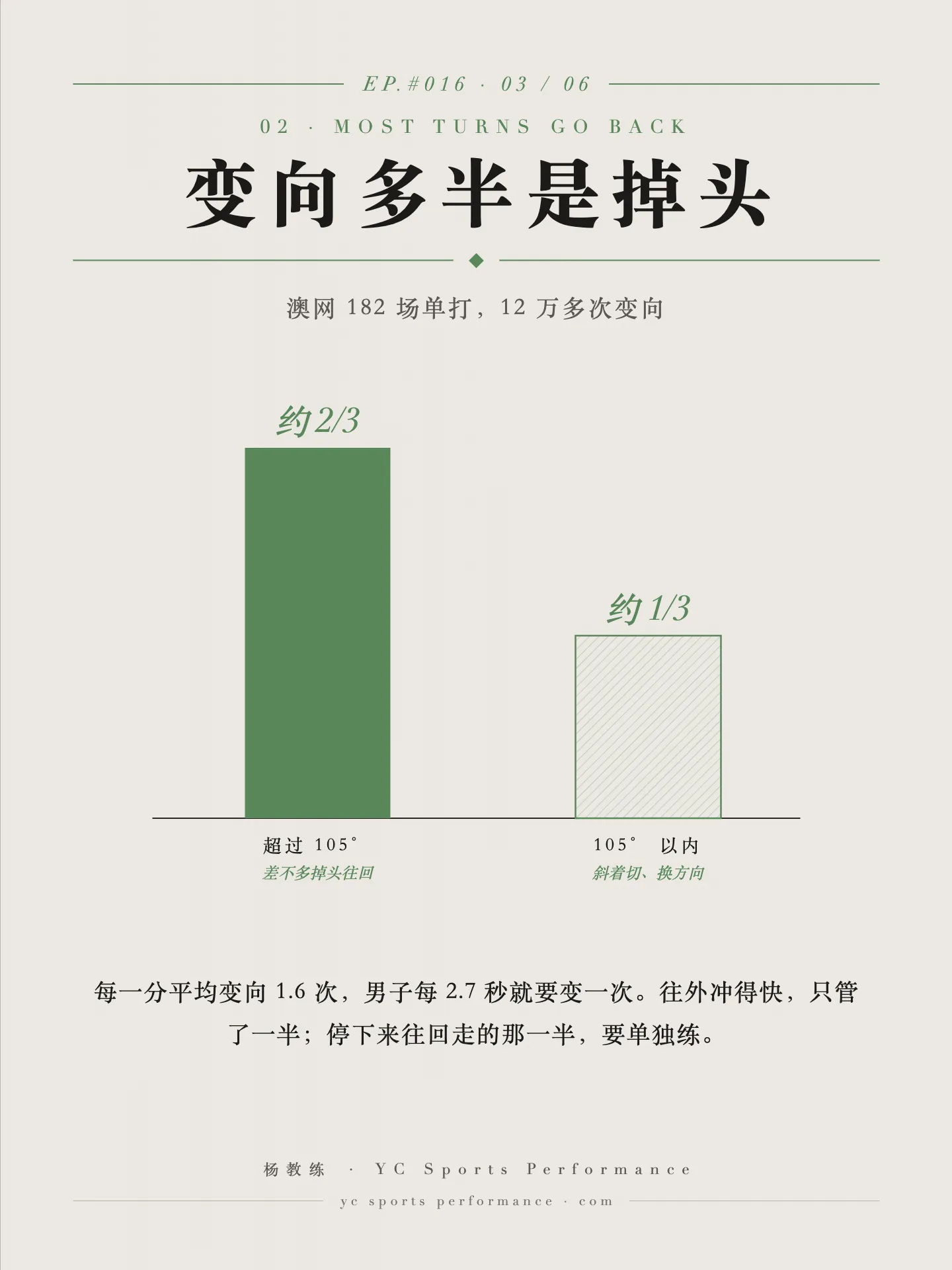
Because the hardest part on a tennis court is stopping and heading back. At the Australian Open, an analysis of 182 singles matches and more than 120,000 changes of direction found an average of 1.6 changes of direction per point; men changed direction every 2.7 seconds, and about two-thirds of changes of direction were greater than 105 degrees – essentially turning around and going back.
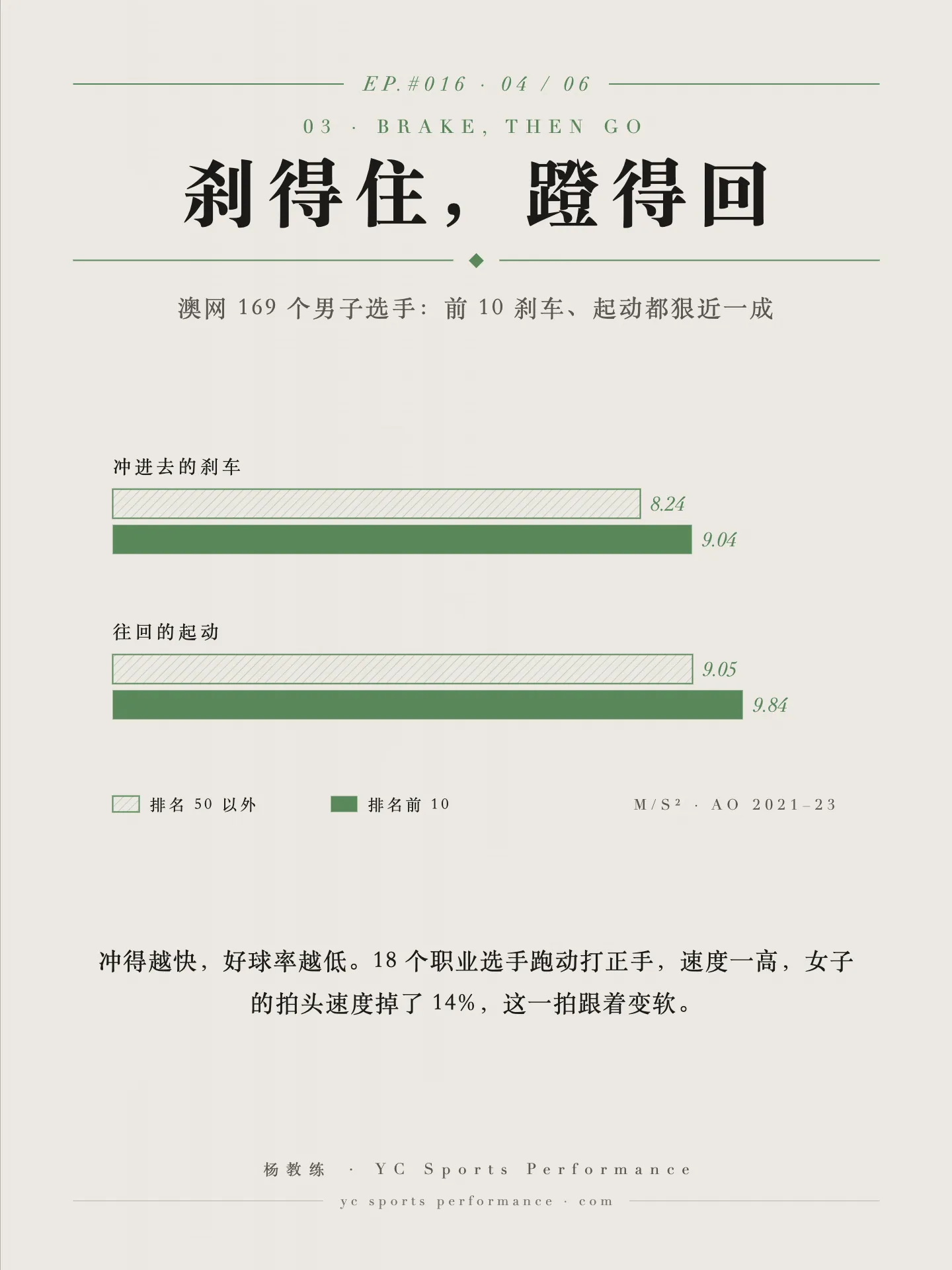
When pulled out to the sideline, professional players sprint an average of 3.7 m laterally along the baseline, brake, then come back 3.9 m. Across 169 male players at the Australian Open and nearly 12,000 of these movements, the top 10 sprinted out faster, braked nearly 10% harder than players ranked outside the top 50, and pushed off on the way back about 10% harder too. And the faster they sprinted out, the lower their chance of hitting a good shot.
It shows in who wins, too. Data from 188 games on the ATP Tour: the players who lost the game actually ran less, 80.17 m versus 84.17 m per game. The difference was in the defensive zone – where you can only keep the ball in play and think about getting back to the middle. The losers spent 14.24 seconds per game there; the winners only 5.86 seconds. If you can't get back into position, you're still defending on the next shot.
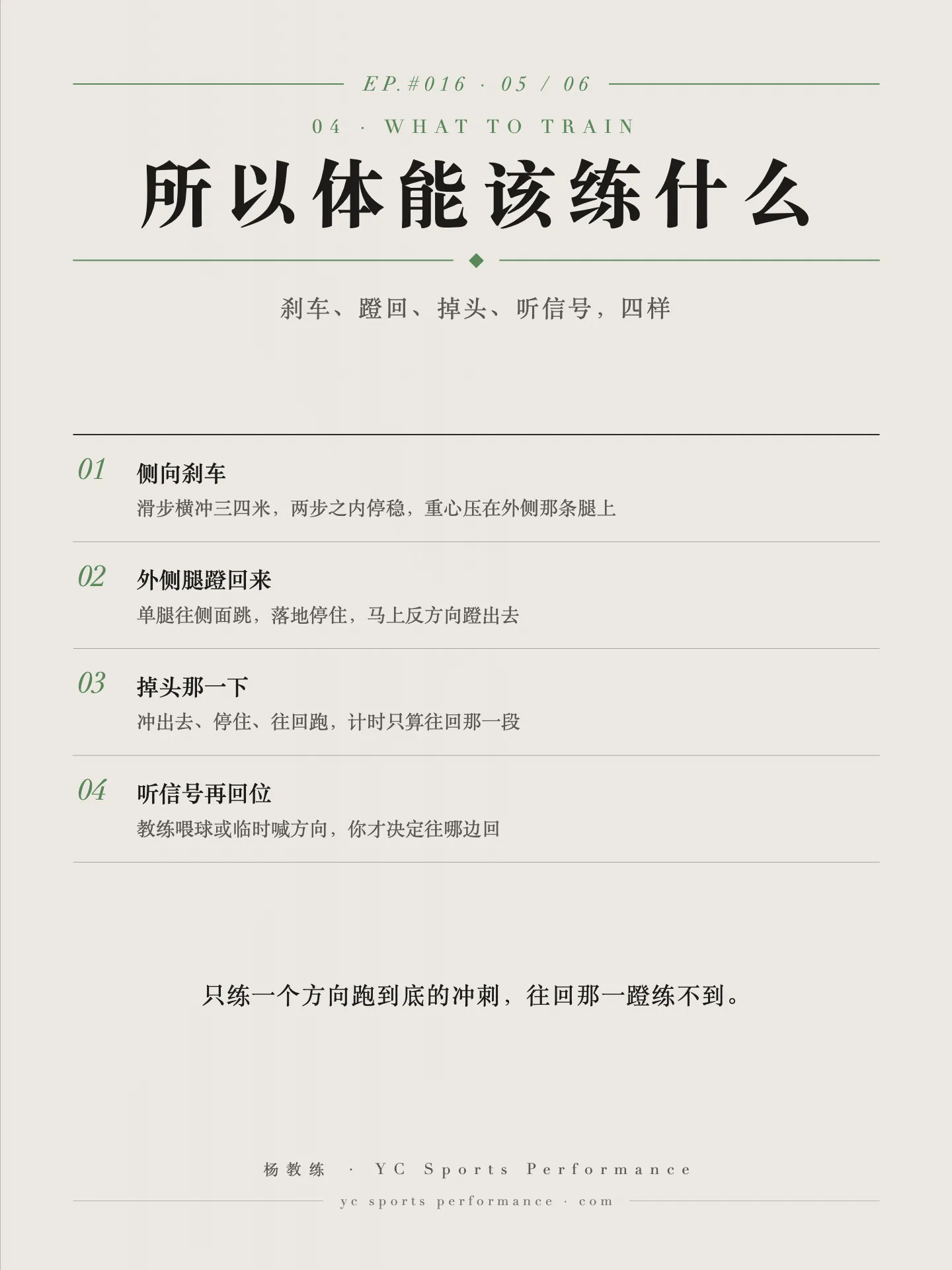
So what should you train? Four things.
Lateral braking: shuffle-sprint three or four metres sideways, stop within two steps, with your weight loaded on the outside leg.
Pushing back off the outside leg: single-leg lateral hops – land, stick it, then immediately push off in the opposite direction.
The turnaround: sprint out, stop, run back – time only the run back.
Recovering on a cue: the coach feeds a ball or calls a direction at the last moment, and only then do you decide which way to recover.
Do you overrun and can't stop, or do you stop but can't push back? Tell me in the comments.
Back to all daily posts