
YC SP.#017Badminton · 2026.10.04
Badminton: always half a step short at the net
The graphics in this post are in Chinese. The text below is an English translation.
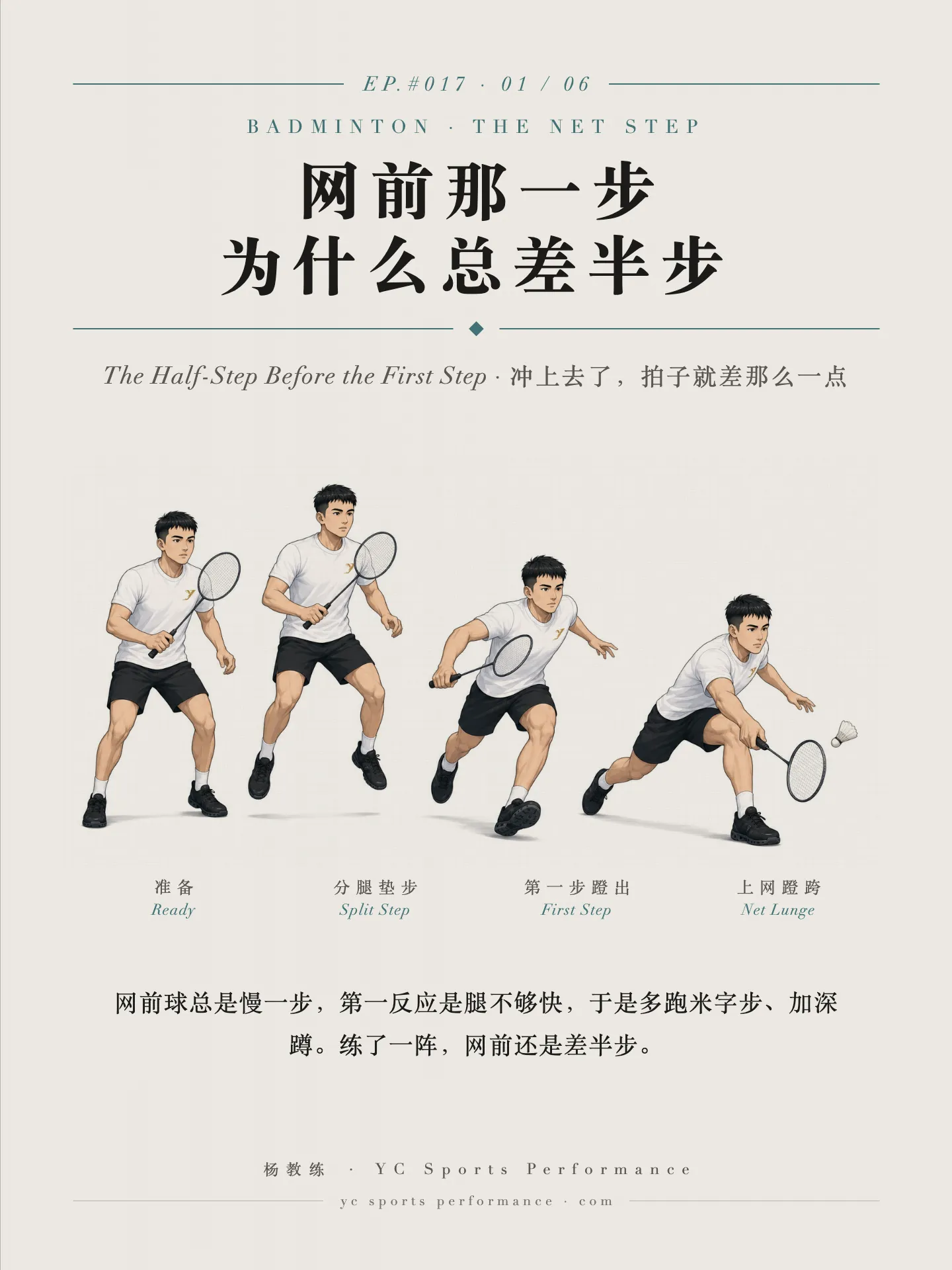


Plenty of badminton players know this: your opponent plays a soft net drop, the shuttle tumbles down tight to the tape, you rush in, and your racket is just short – all you can manage is a scrappy lift. The usual first reaction is that your legs aren't quick enough, so you do more star-pattern footwork and add squats. After a while, you're still half a step short at the net. Why?
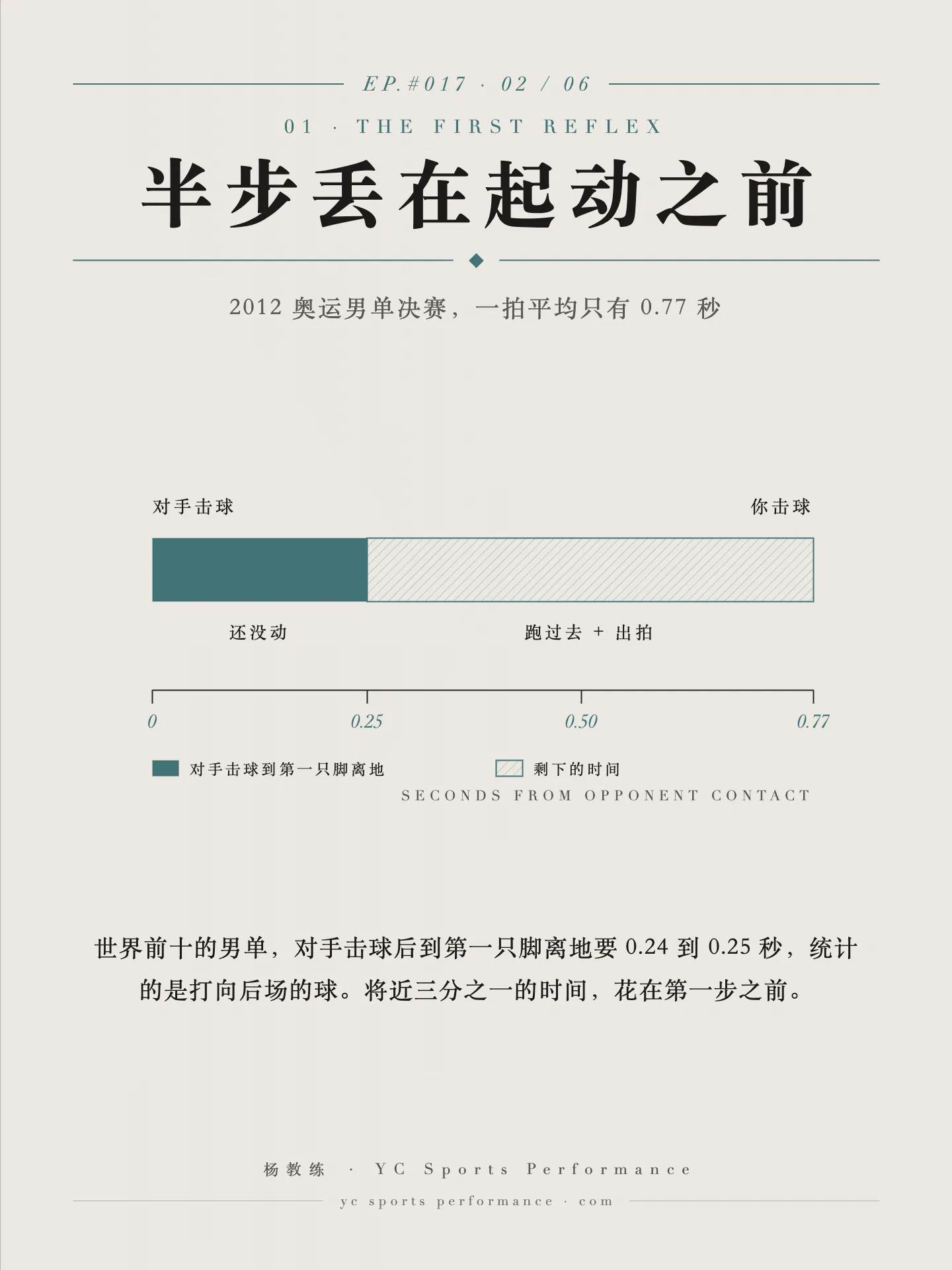
Because the time for each shot is already very short, and that half step is mostly lost before your first step. In the men's singles final at the London 2012 Olympics, there were 1.3 shots per second on average, leaving only 0.77 seconds on average from your opponent's hit to yours. For the world's top-10 men's singles players, it takes 0.24 to 0.25 seconds from the opponent's hit until the first foot leaves the ground (measured on shots to the rear court). Even the best players use up nearly a third of the time before they start moving.
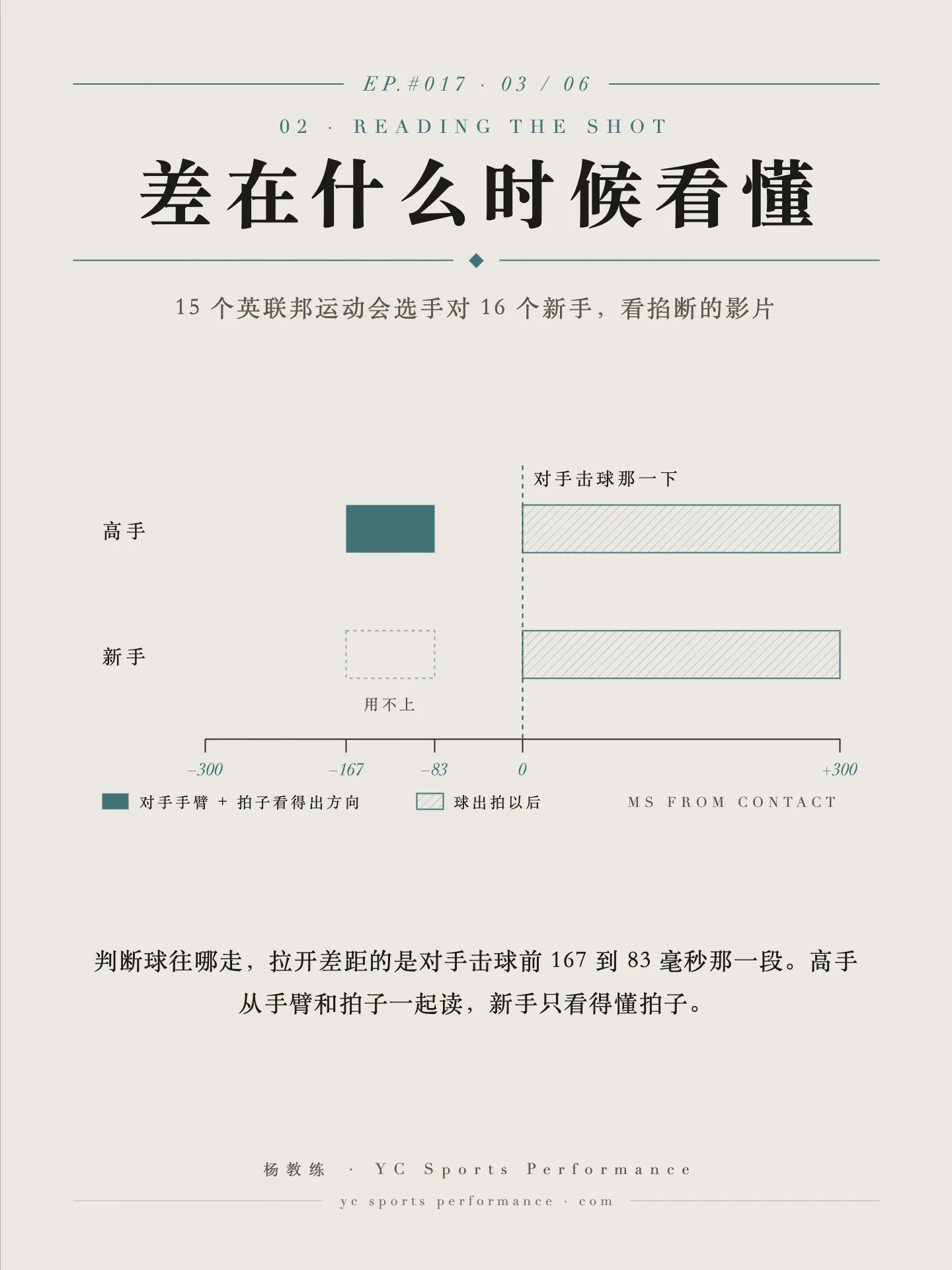
Reason one: you read it late. In a 1987 badminton study, 15 Commonwealth Games players and 16 novices watched film of shots that was cut off at different moments. What separated the two groups was the window from 167 to 83 milliseconds before the opponent's hit: the experts read where the shuttle was going from the opponent's arm and racket together, while the novices could only read the racket.
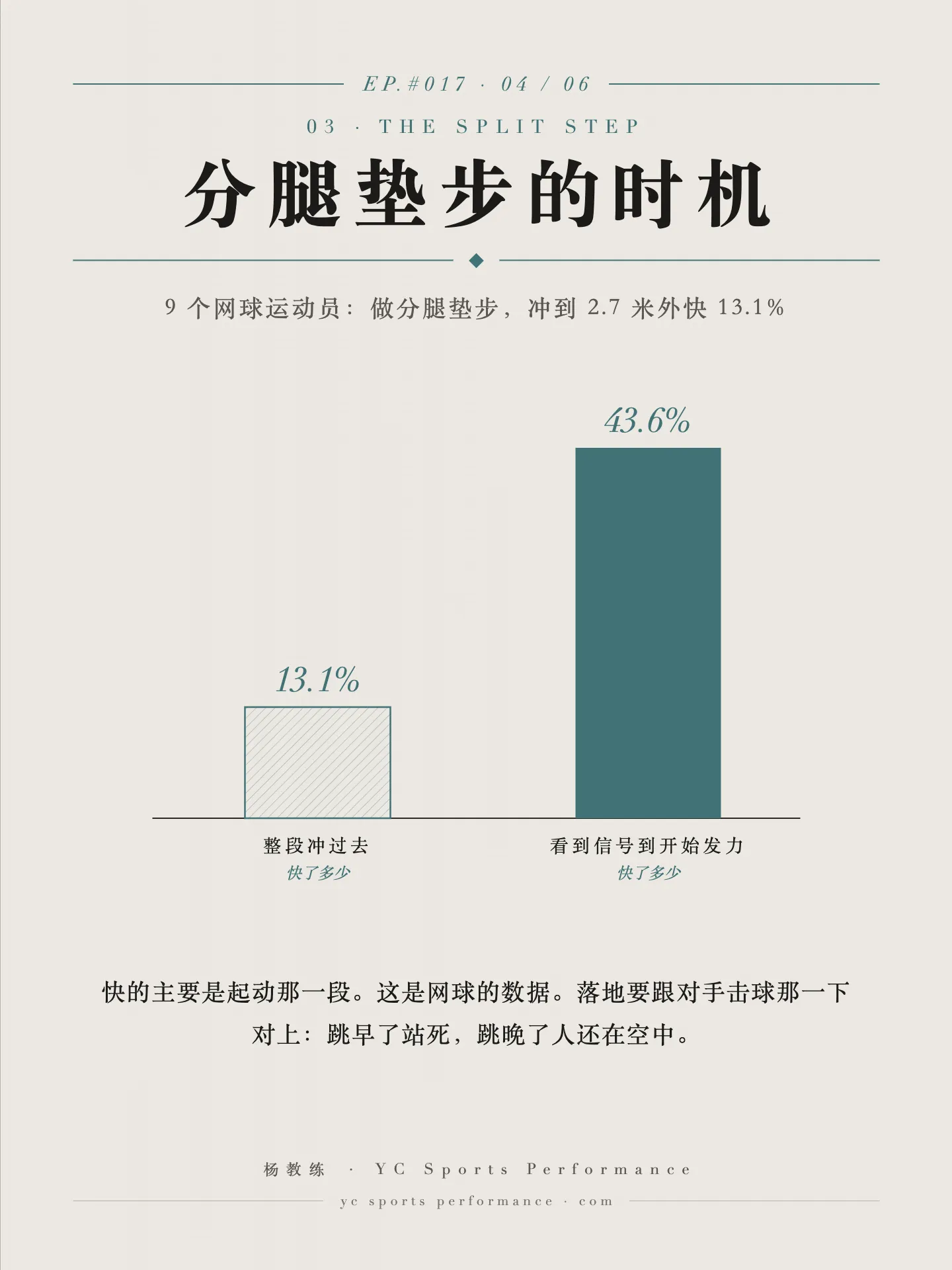
Reason two: your split step isn't timed right. In a test of 9 tennis players, using a split step made them 13.1% faster to reach a point 2.7 m away, mostly in the phase from seeing the cue to starting to produce force, which was 43.6% faster. That's tennis data; there's no equivalent comparison for badminton. My view is that your landing should coincide with your opponent's hit. Jump too early and you land flat-footed and have to bend your knees again; jump too late and the shuttle is already off the racket while you're still in the air.
So what should you train? Four things.
Split-step timing: jump as your opponent takes the racket back and land as they hit; have a partner feed randomly to the net and rear court.
Starts without a set direction: decide where to go only after reading your partner's hand signal or racket face – pre-set star-pattern footwork doesn't train this.
The first-step push: with a resistance band pulling back at your waist, still drive forward.
A lunge you can stop in: the lunging leg sticks the landing, knee tracking over the toes, then push back to the centre.
Is it that you can't read where the shuttle is going, or you read it but your legs can't keep up? Tell me in the comments.
Back to all daily posts