
YC SP.#009Squash · 2026.09.23
Half a beat late to the ball in squash: the problem isn't your reaction speed
The graphics in this post are in Chinese. The text below is an English translation.
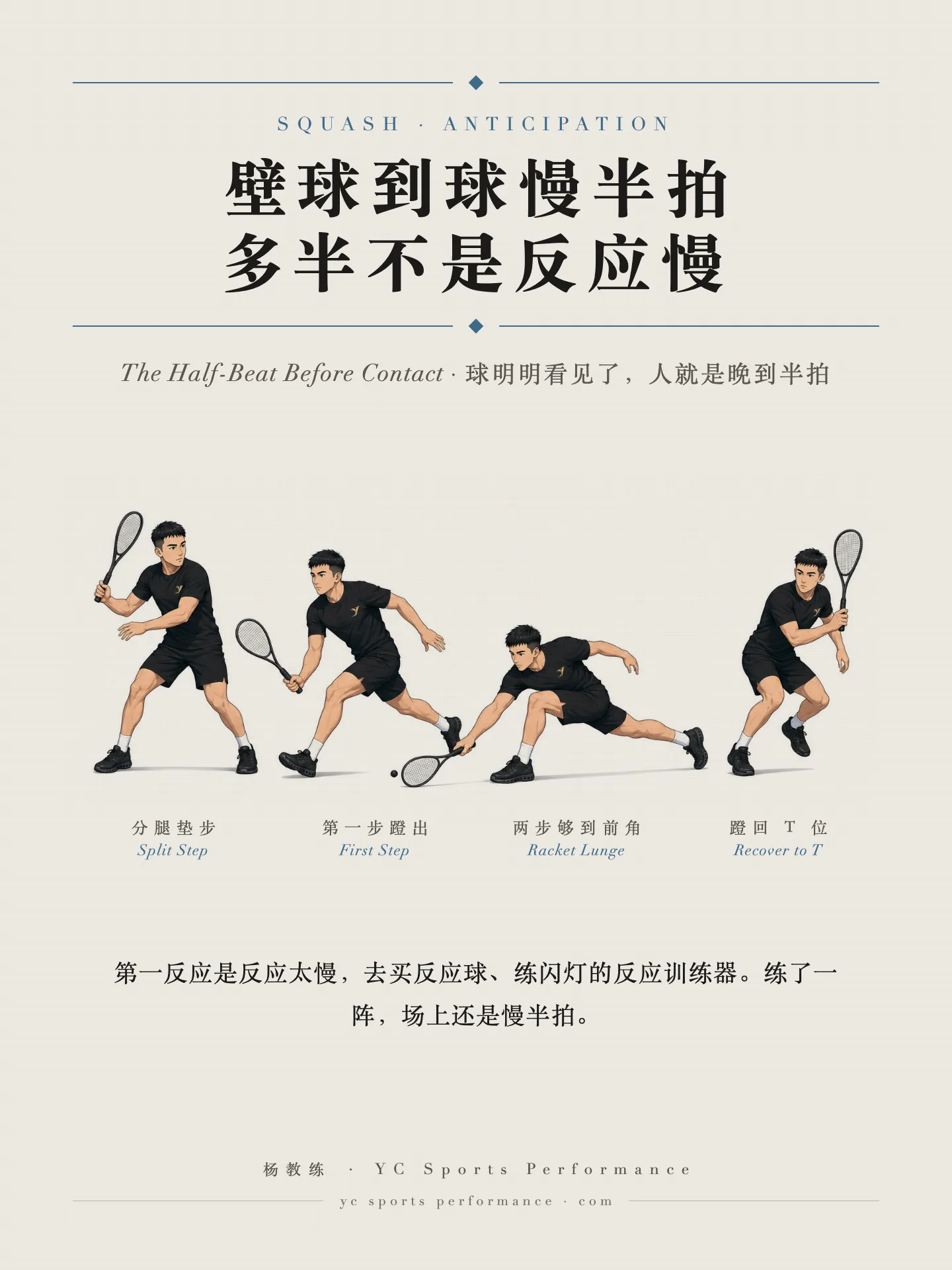
Many squash players know this feeling: you clearly saw the ball, but you still arrive half a beat late; you reach it, but your position has already fallen apart. The usual first reaction is that your reactions are too slow, so you buy a reaction ball or train on a light-up reaction trainer. After a while of that, you're still half a beat late on court. Why?
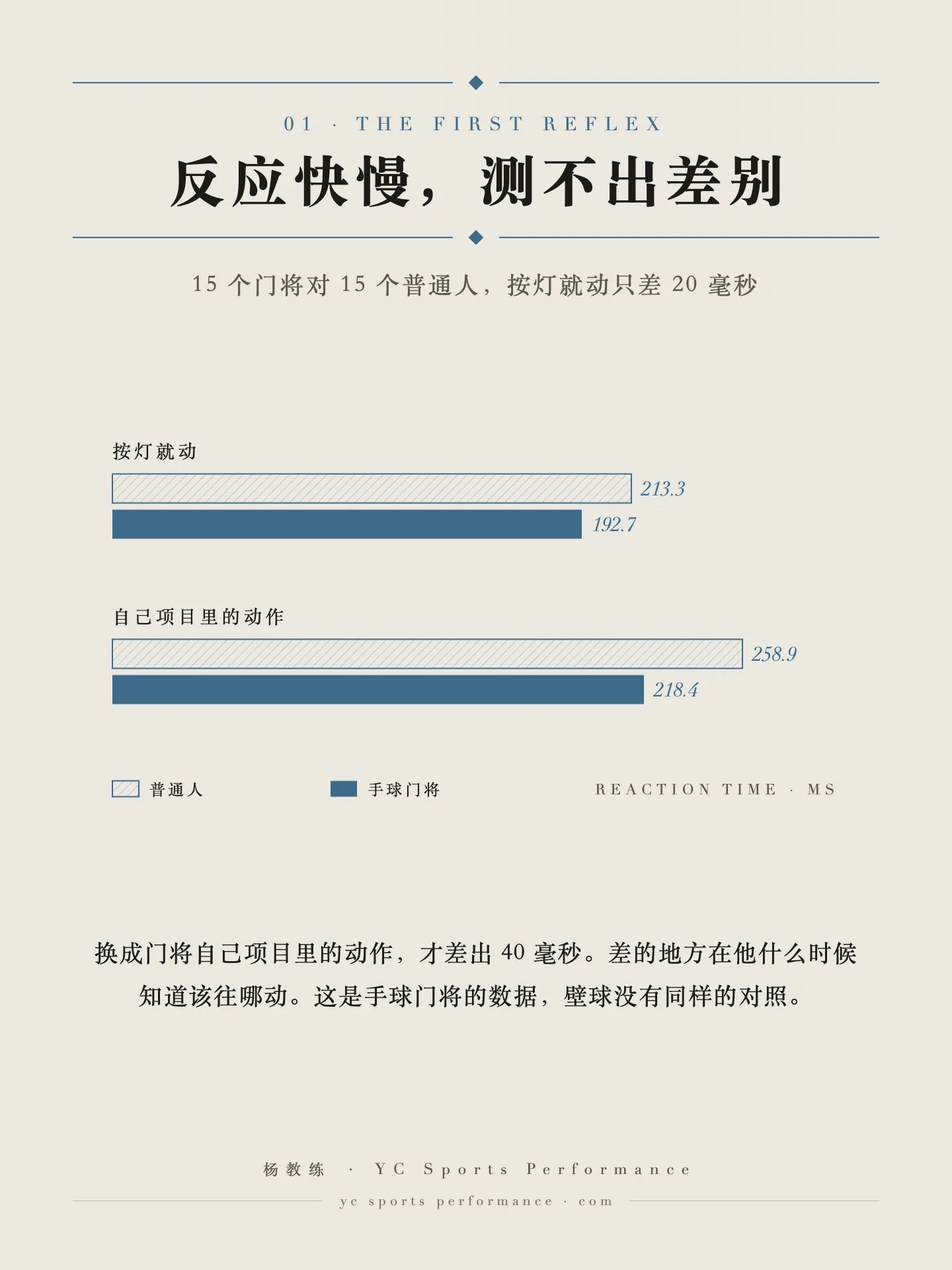
Because in the react-to-a-light kind of speed, skilled players and ordinary people are about the same to begin with. One comparison used handball goalkeepers: 15 goalkeepers against 15 ordinary people. Reacting to a light, the goalkeepers took 192.7 ms and the others 213.3 ms, and that 20 ms gap wasn't statistically significant. Only with movements from the goalkeepers' own sport did a 40 ms gap appear. The time is lost in when they know which way to move.
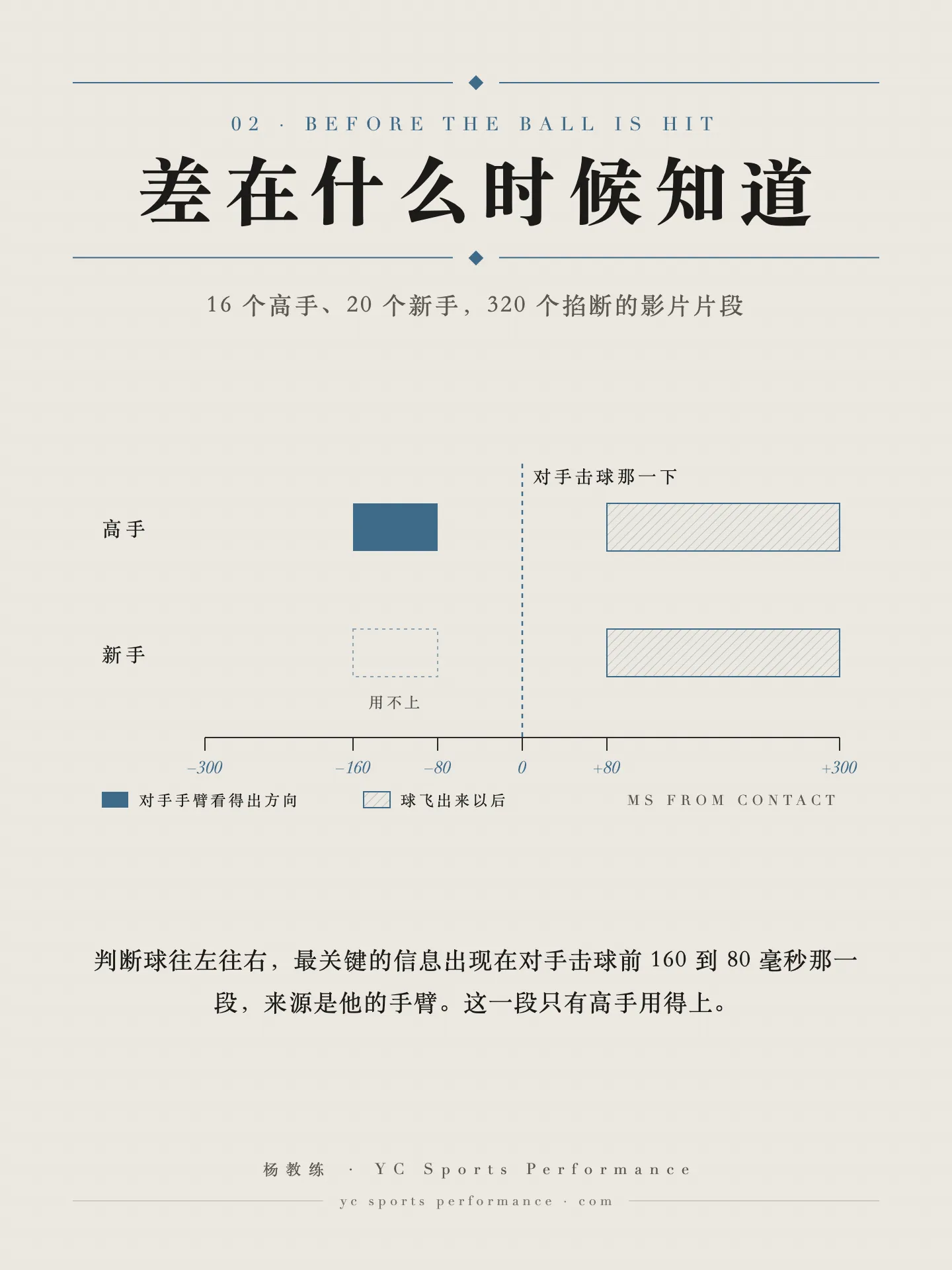
In squash, there's that batch of studies from 1990: 16 skilled players and 20 novices watched film of an opponent hitting, with the clip cut off at different moments. For judging whether the ball would go left or right, the most important information appeared 160 to 80 ms before the opponent hit the ball, and it came from their arm. Only the skilled players could use this window; the novices had to wait until the ball was in the air to read it.
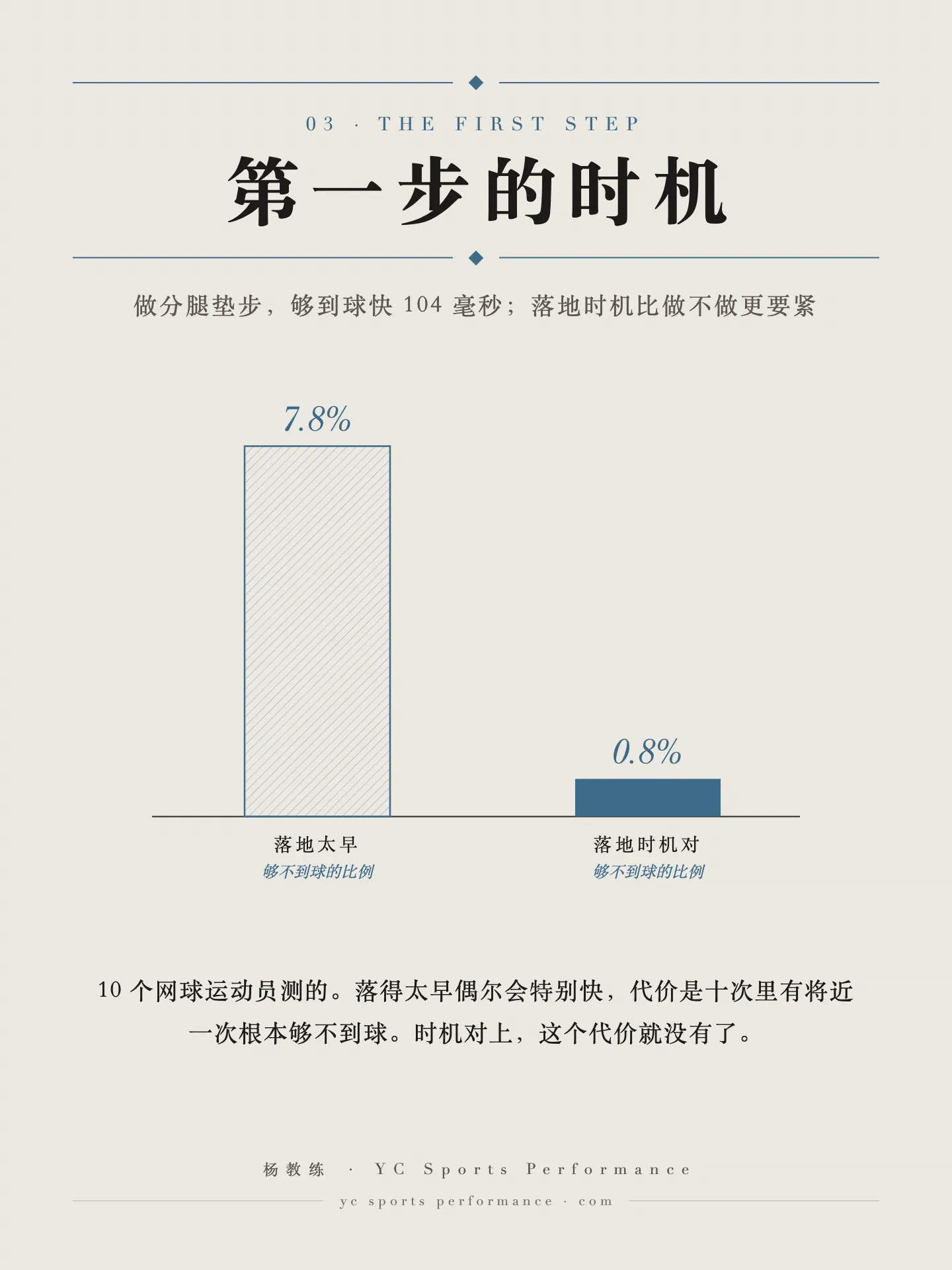
Only once you know where to go does the first step come into it. A split step is that small hop you do as your opponent is about to hit, landing on both feet. 10 tennis players were tested: with a split step, they reached the target in 764 ms; without one, 868 ms. More important is when you land: land too early and 7.8% of balls are simply out of reach; land within the right window and the error rate is only 0.8%.
This is where it's easiest to train the wrong thing. Squash players and football and rugby players ran the same generic agility shuttle test with identical results, 14.75 s vs 14.79 s; on a change-of-direction test using squash's own movement patterns, the squash players ran 10.90 s and the other group 12.20 s. Drills with a set route train you to move when you already know where you're going; on court you have to move before you know.
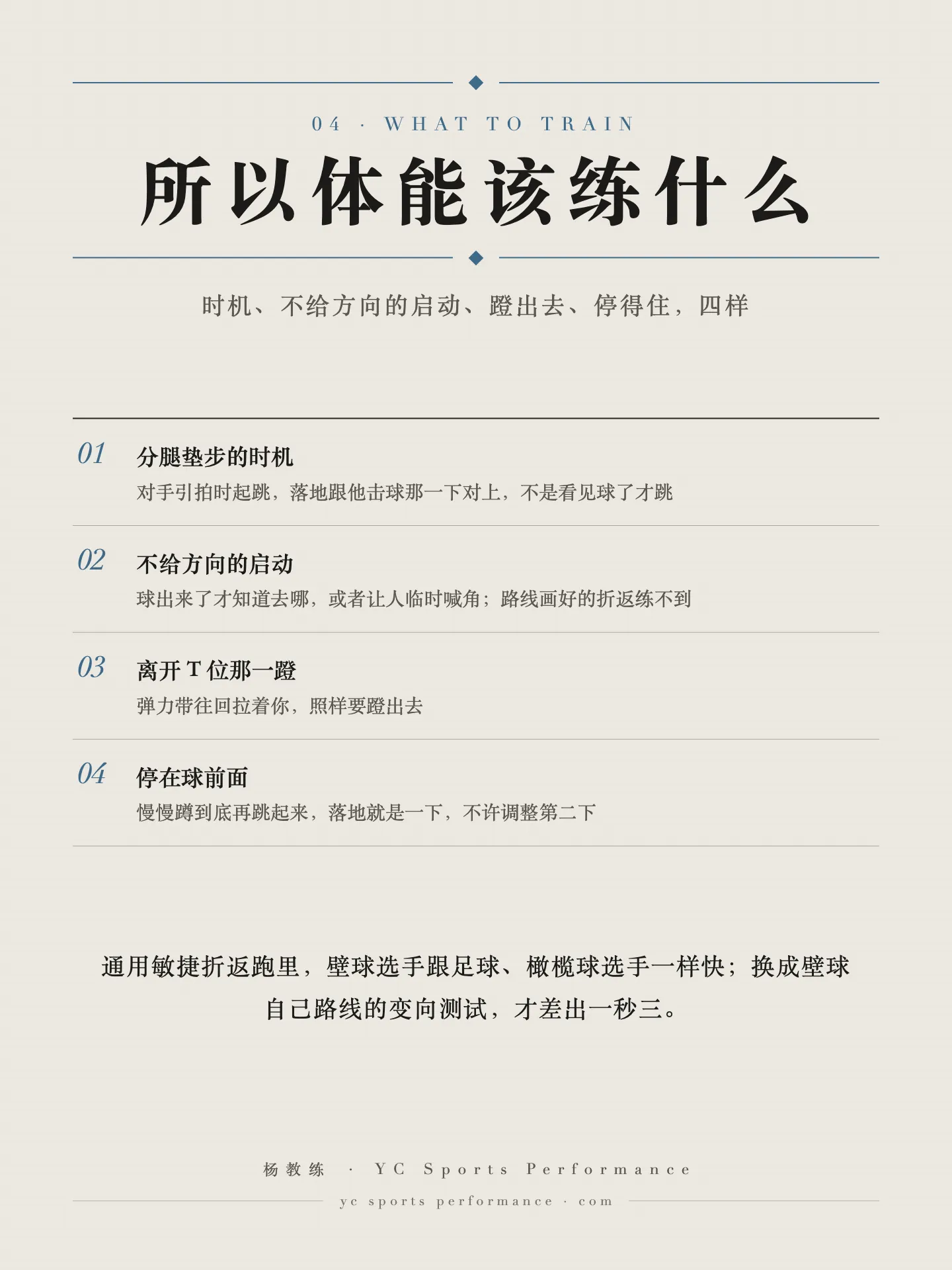
So what should you train? Four things.
Split-step timing: hop as your opponent takes the racquet back, and time your landing to their contact.
Starts with no direction given: you only find out where to go once the ball comes off, which pre-set shuttle drills can't train.
The push off the T: with a resistance band pulling you back, you still have to drive out.
Stopping in front of the ball: lower slowly all the way into a squat, then jump; land in one go, with no second adjustment allowed.
Is it that you can't read where the ball is going, or that you read it but your legs can't keep up? Tell me in the comments.
Back to all daily posts