
YC SP.#036General fitness · 2026.10.14
Aches every time you train: too much training, or the wrong training?
The graphics in this post are in Chinese. The text below is an English translation.
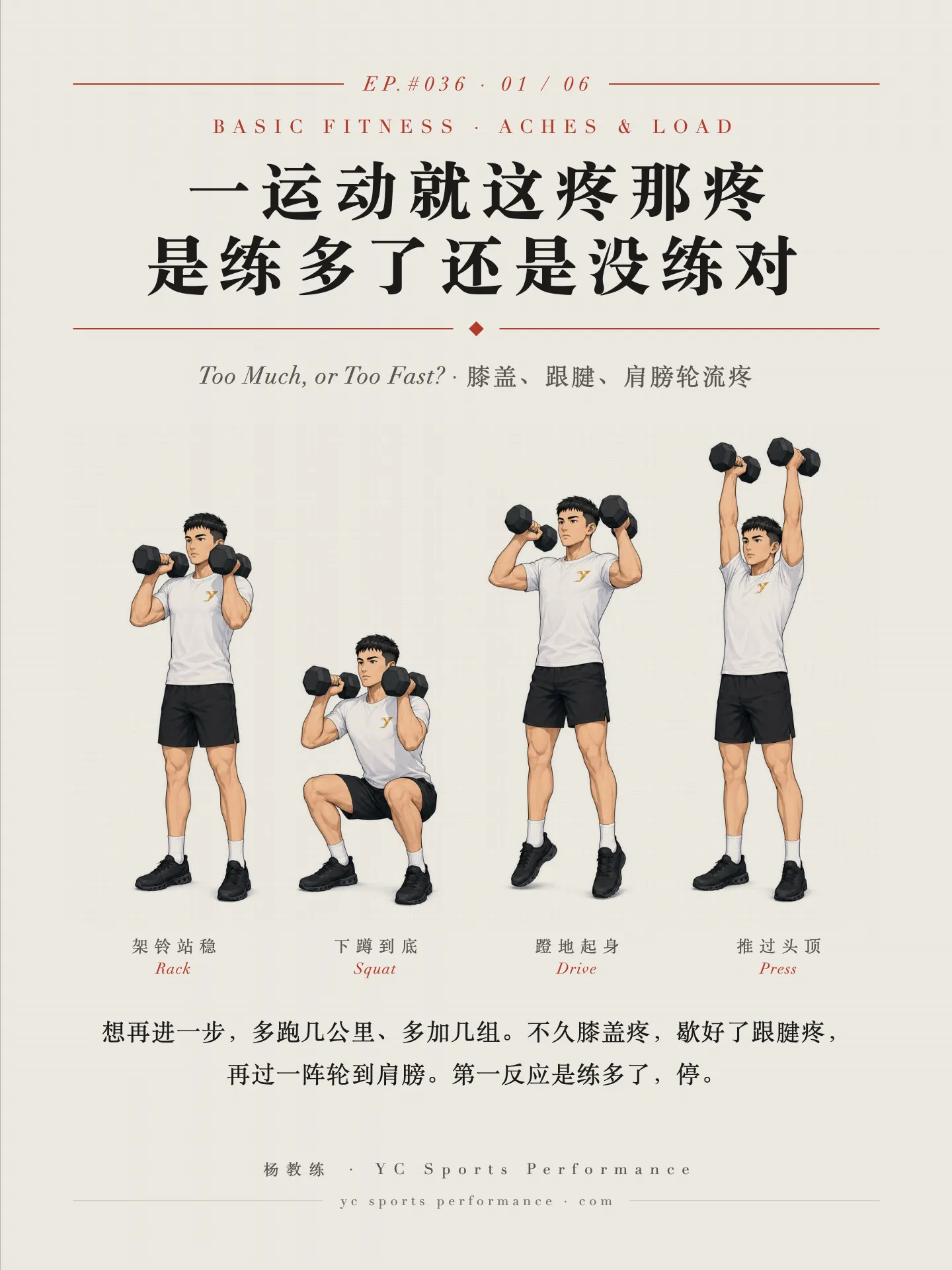
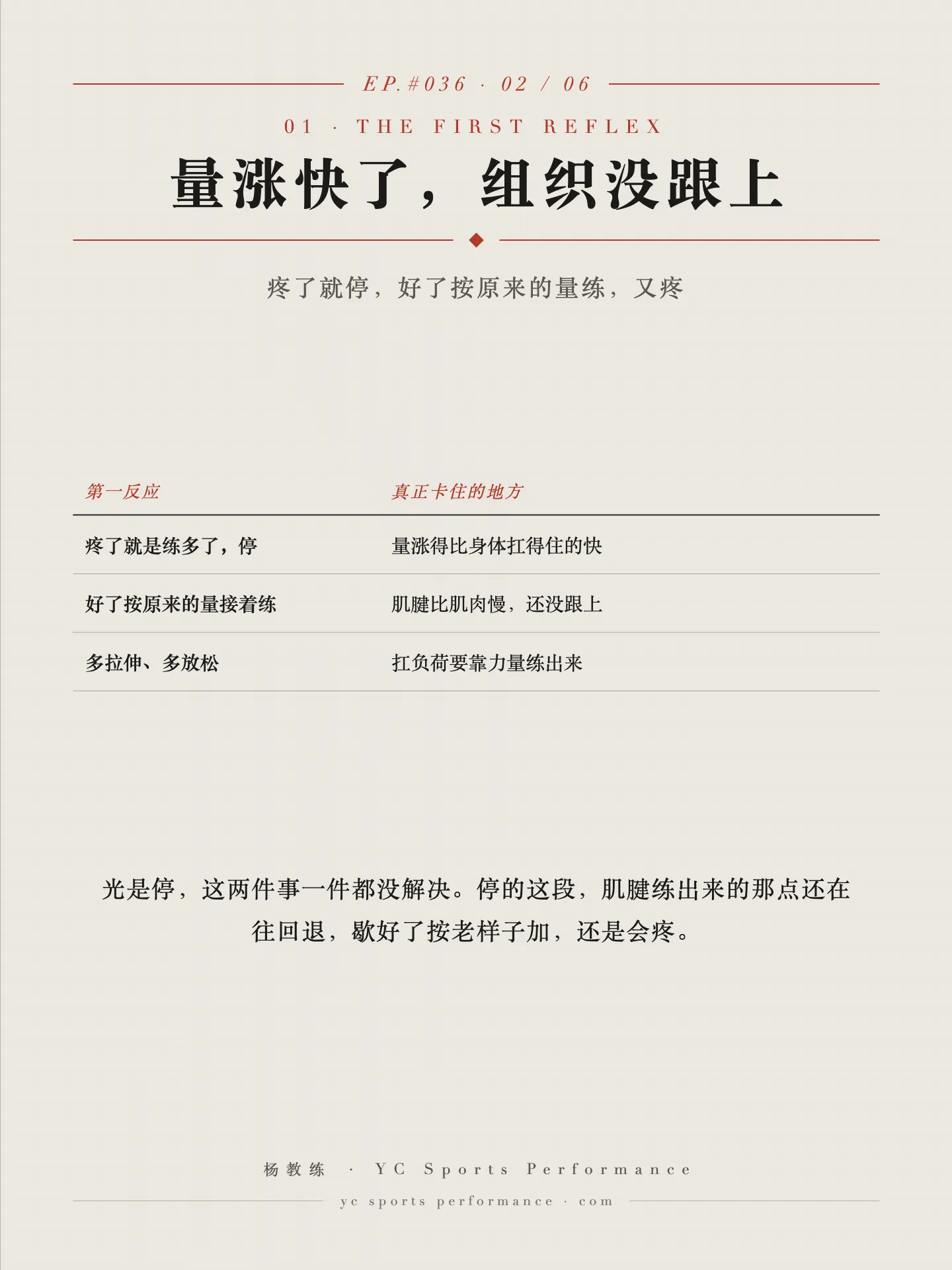
Plenty of people who exercise regularly have been through this: you want to step it up – run a few more kilometres, add a few more sets, play a couple more games. Before long your knee hurts; once that settles, your Achilles hurts; a while later it's your shoulder's turn. The first reaction is that you've trained too much, so you stop, wait for the pain to go, return to the same volume as before – and it hurts again. Why?
Because this kind of pain usually comes down to two things: your volume went up too fast, and the tissues that bear the load didn't keep up. Just stopping solves neither.
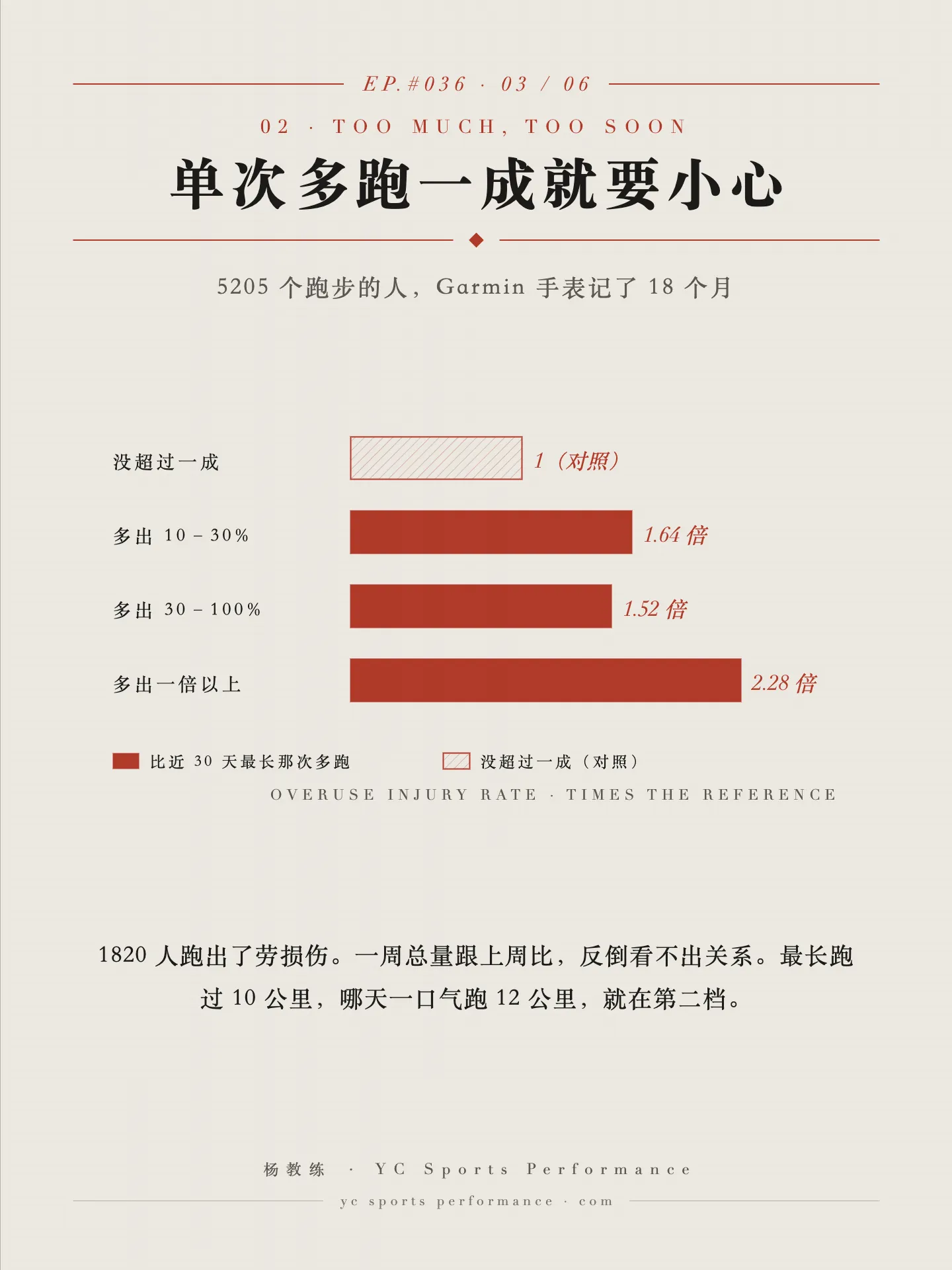
First, volume going up too fast. A Danish study used Garmin watches to track 5205 runners for 18 months, and 1820 of them developed overuse injuries. Comparing each run's distance with the longest run in the previous 30 days: when it was 10% to 30% longer, the injury rate was 1.64 times that of the reference group; 30% to 100% longer, 1.52 times; more than double, 2.28 times. Comparing total weekly volume with the previous week, on the other hand, showed no clear relationship. If your longest run in the past month was 10 km and one day you run 12 km in one go, you're in the 10% to 30% band.
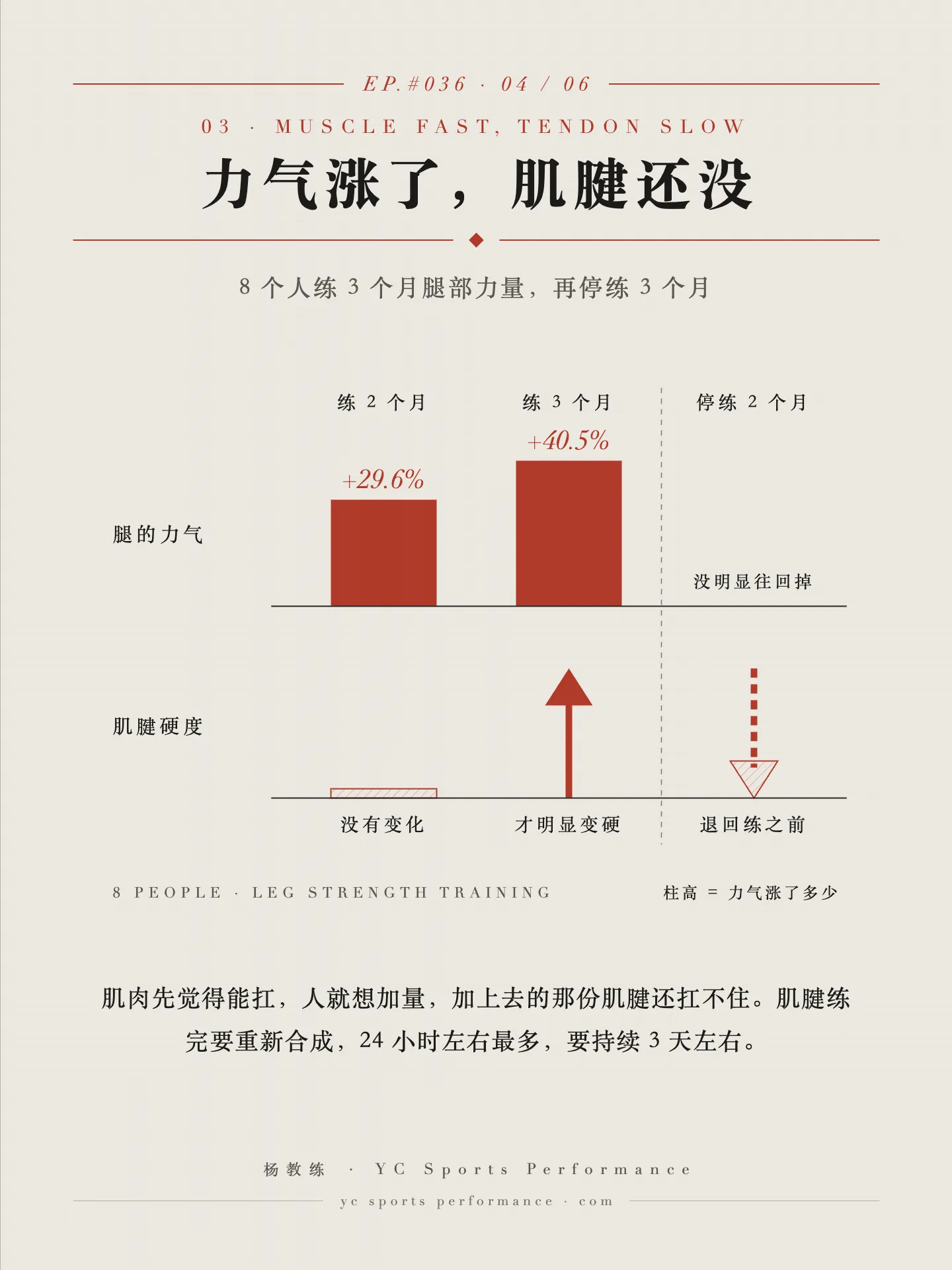
Next, tissues not keeping up. In a Japanese study, 8 people did leg strength training for 3 months: strength rose 29.6% in 2 months, but tendon stiffness didn't change in the first 2 months and only increased clearly in the 3rd; after 2 months off training, it went back down. Your muscles feel ready to handle more first, so you want to add volume – but your tendons can't yet take that extra load. The knee, Achilles and shoulder have a lot of tendons and take big forces, so when volume rises fast, whichever is weakest hurts first.
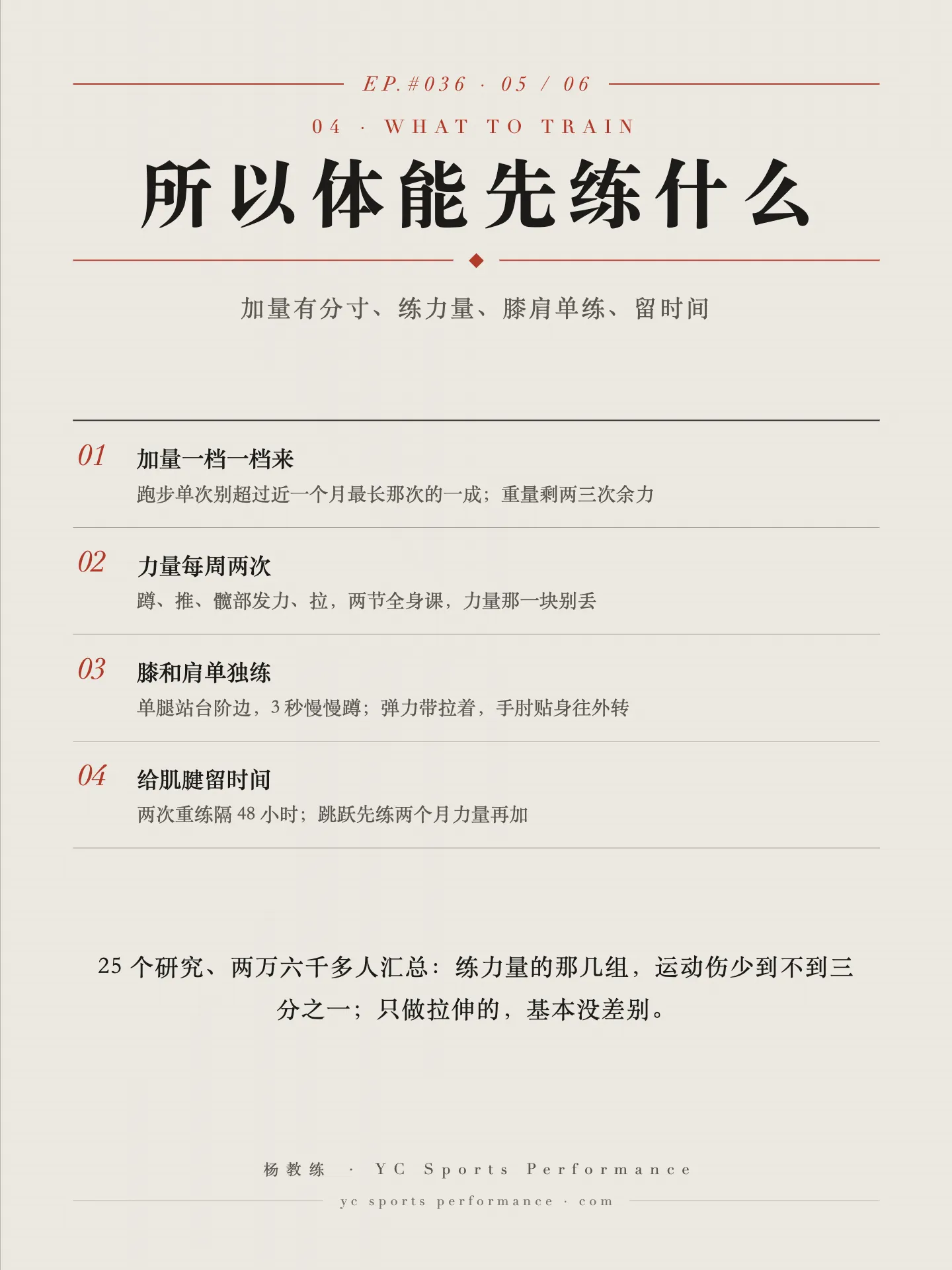
So what should you train first? Four things.
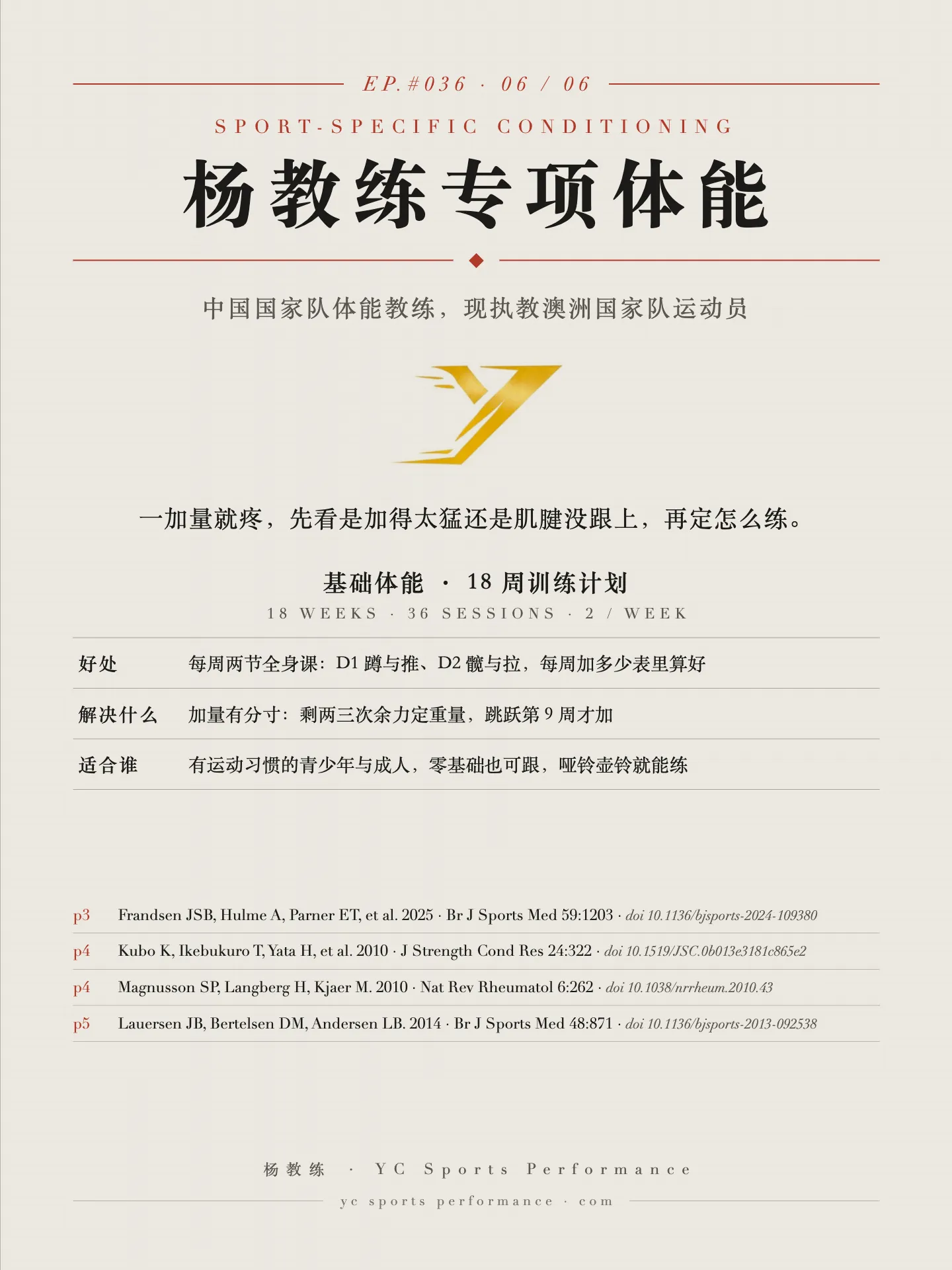
Increase volume one step at a time: no single run more than 10% longer than your longest in the past month; for strength work, the right weight is one where you finish a set with two or three reps left in the tank.
Strength training twice a week: squat, push, hip hinge and pull. Pooling 25 studies and more than 26,000 people, sports injuries in the strength training groups fell to less than a third, while stretching alone made essentially no difference.
Train knees and shoulders on their own: single-leg squats on the edge of a step, lowering slowly over 3 seconds; band external rotations with your elbow tucked in at your side.
Give your tendons time: 48 hours between heavy sessions; build strength for two months before adding jumping. Stop immediately if you feel sharp pain, and if pain persists, see a qualified professional first.
Where are you hurting lately – knee, Achilles or shoulder? Tell me in the comments.
Back to all daily posts