
YC SP.#029Handball · 2026.10.10
Jumping straight after contact: that's handball-specific conditioning
The graphics in this post are in Chinese. The text below is an English translation.
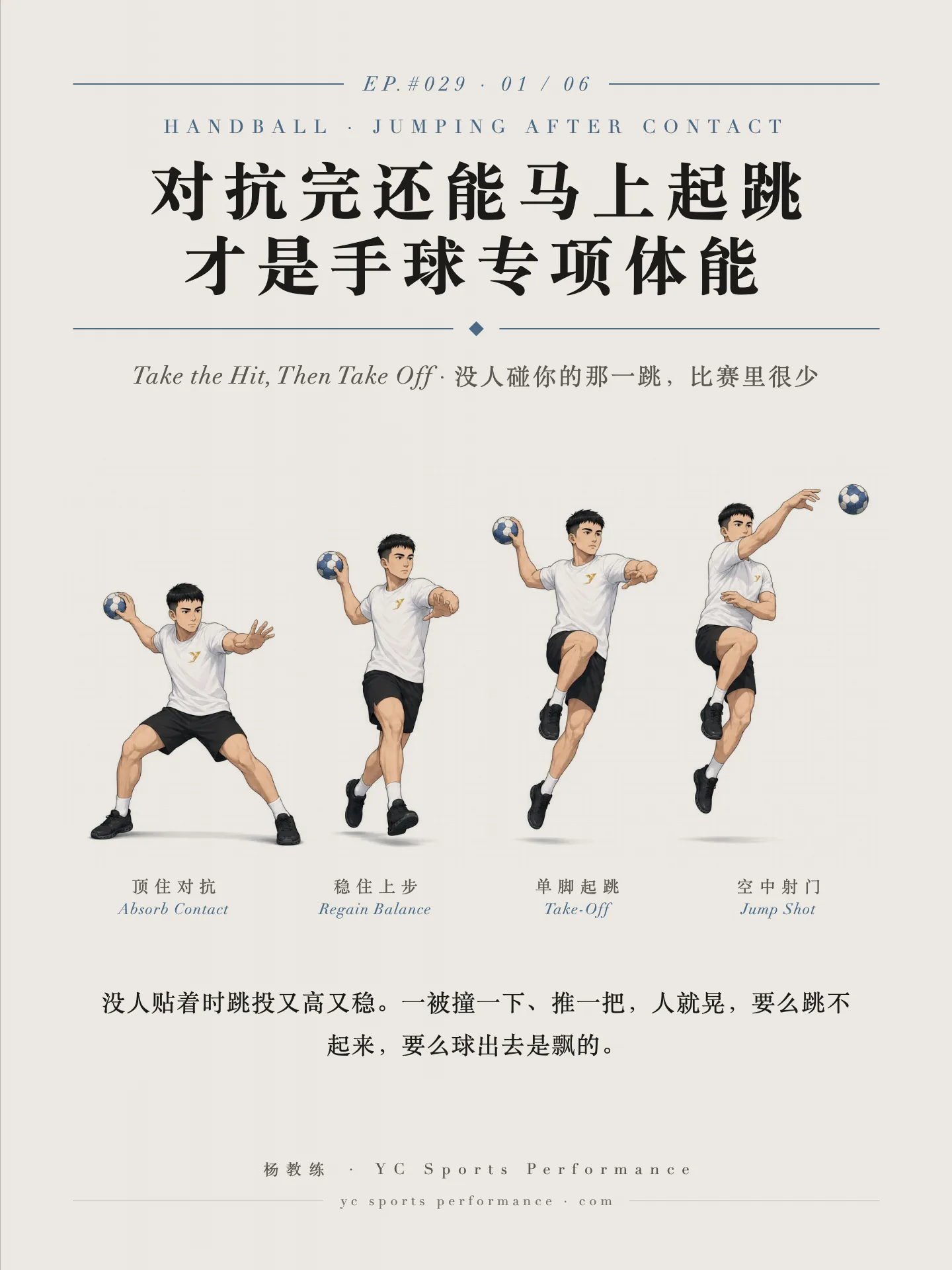
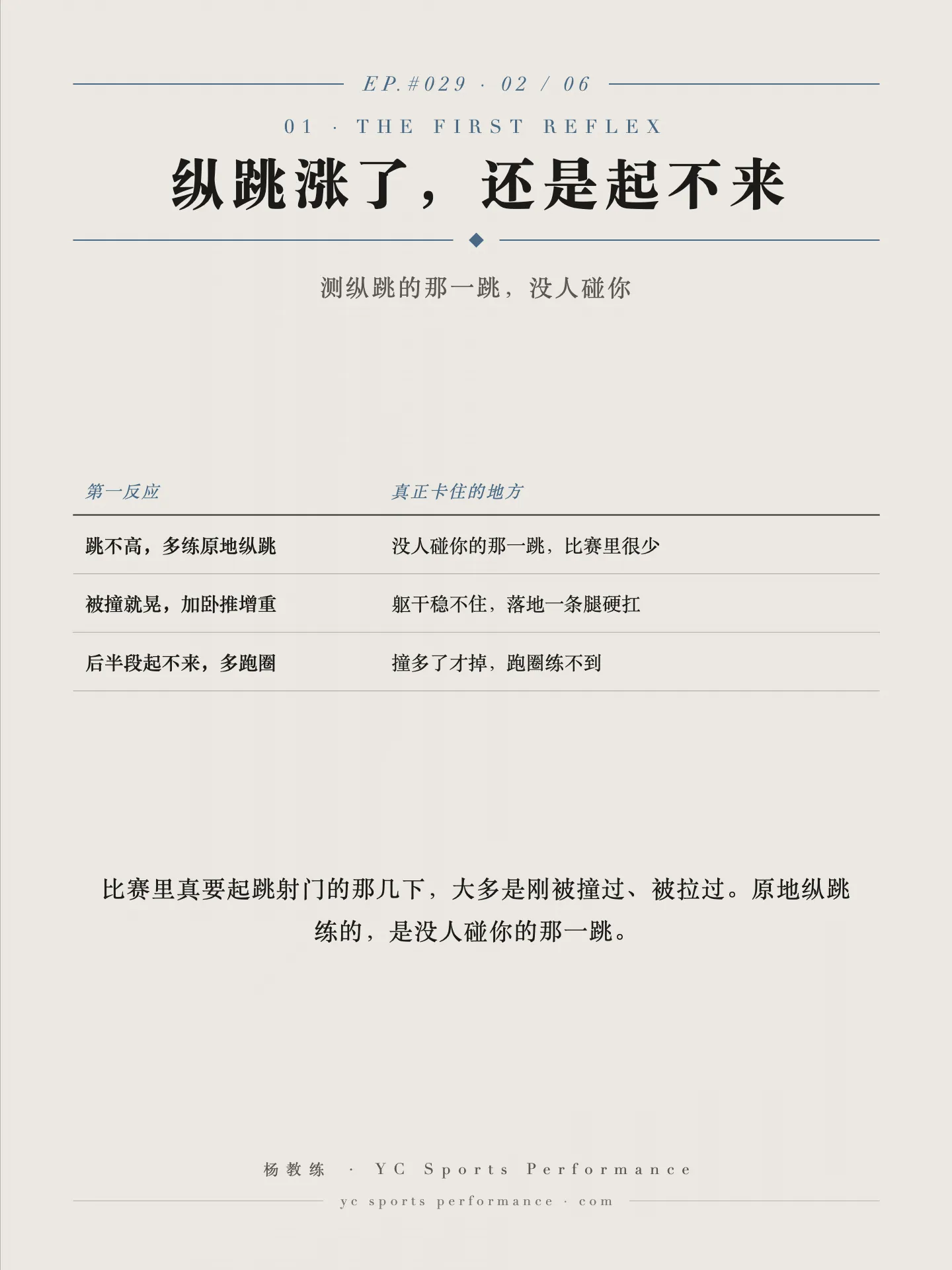

Plenty of handball players know this: with no one on you, your jump shot is high and steady; but take a bump or a shove and you're thrown off balance – either you can't get up, or the ball floats. The first reaction is that your jump isn't good enough, so you do more vertical jumps and add squats. Your tested vertical jump goes up, but in a game, as soon as there's contact, you still can't get up. Why?
Because no one touches you on a vertical jump test. In a game, most of the jumps you actually shoot from come right after you've been hit.
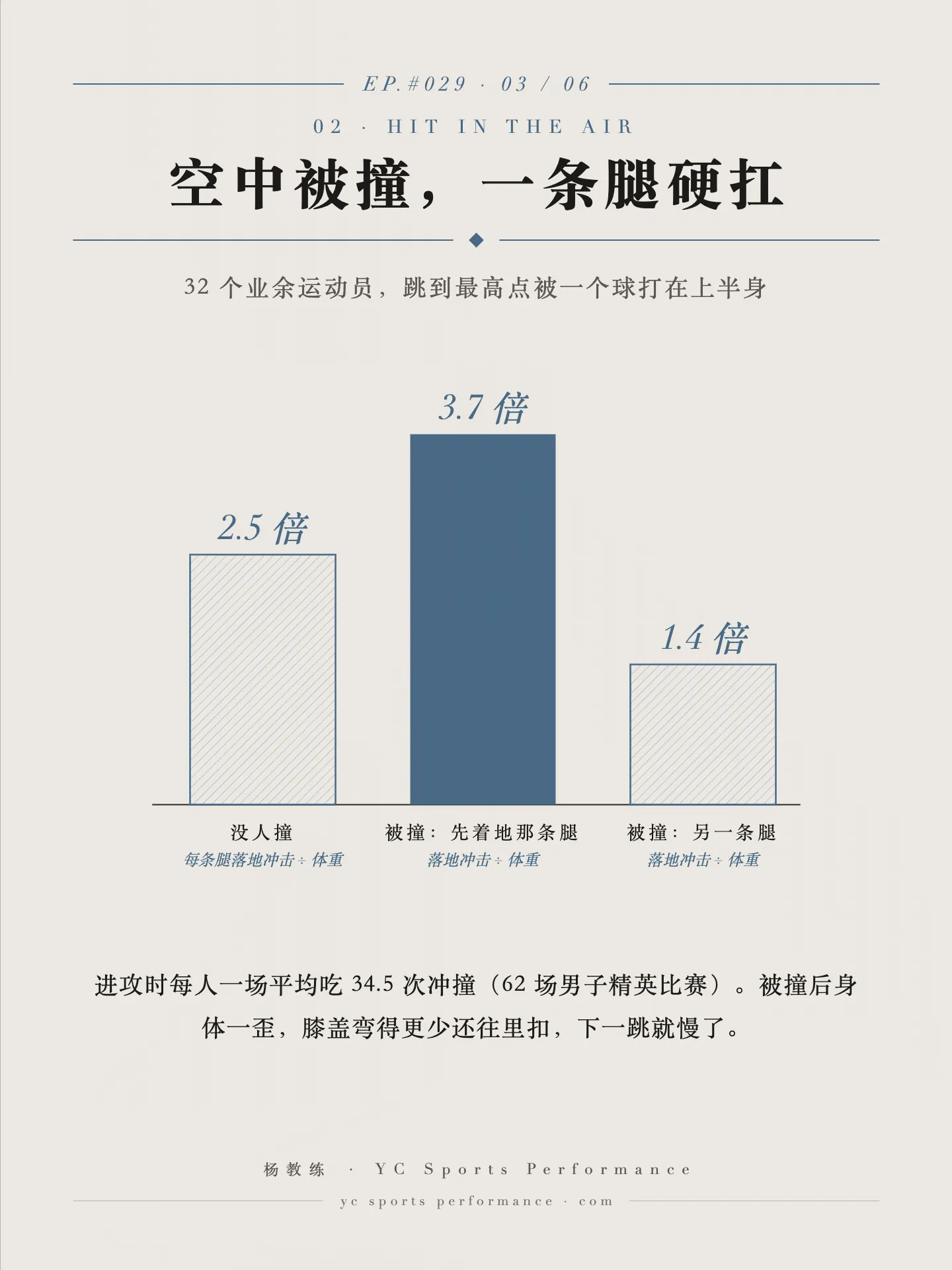
One study counted contacts across 62 elite men's matches: in attack, each player took an average of 34.5 impacts per match, with backcourt players and pivots taking more.
Here's what happens when you get hit. In a study, 32 recreational athletes did standing jumps, and near the peak a machine struck their upper body with a 4.54 kg ball. Without contact, each leg absorbed an impact of about 2.5 times body weight on landing; after contact, the body tilted, the leg on the other side landed first, and that one leg took 3.7 times body weight, with the knee caving inwards. If the upper body can't stay stable, that landing isn't stable, and the next jump is slower.
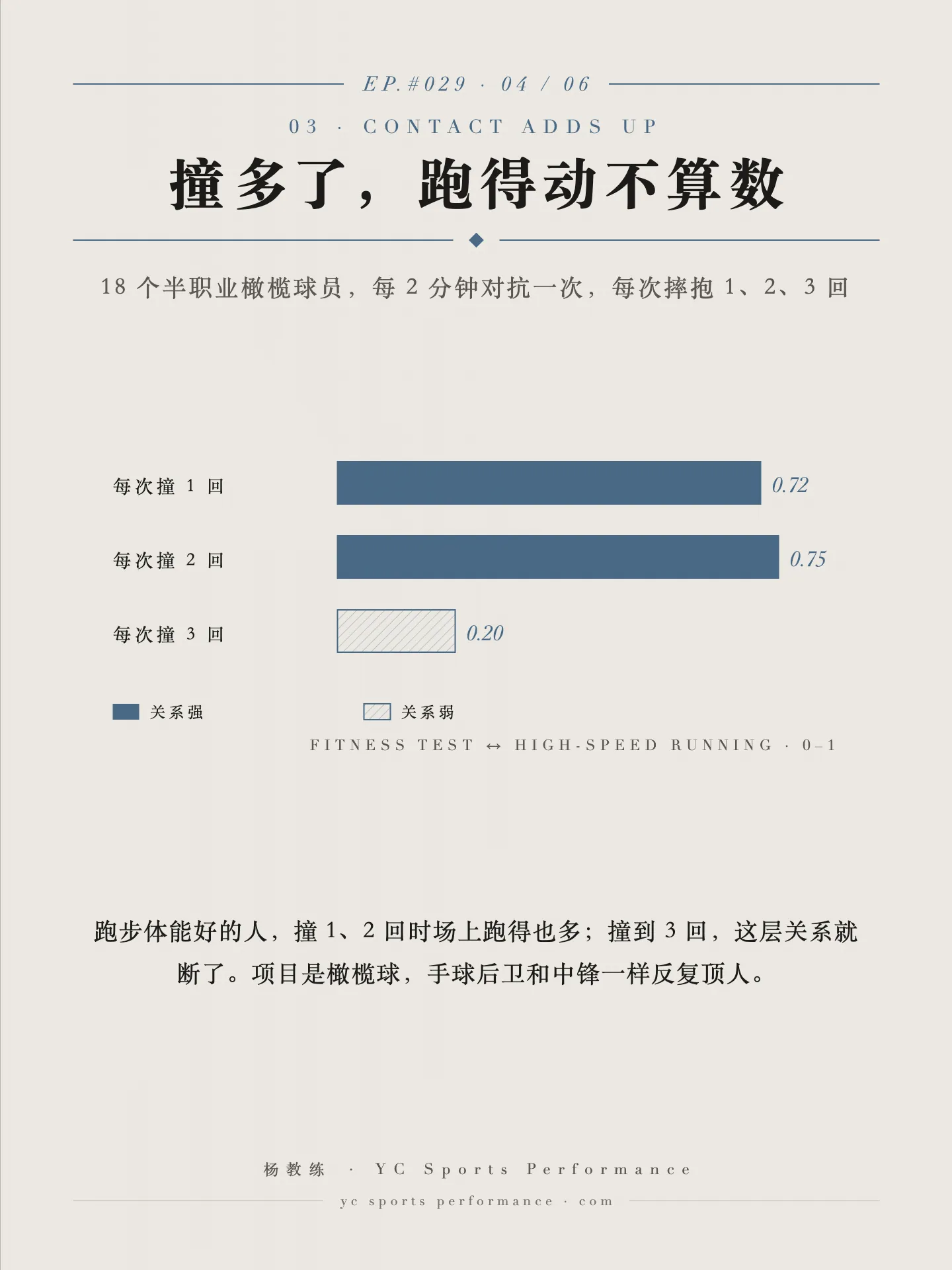
Being hit once and being hit several times are two different things. In a rugby league study with a contact bout every 2 minutes: with 1 or 2 contacts, players with better running fitness also covered more distance (correlations of 0.72 and 0.75); with 3 contacts, it was only 0.20. Once contact piles up, being able to run tells you little about whether you can still run after being hit. This is key.
So what should you train? Four things.
A trunk that can take a hit: planks and side planks on a TRX – hold firm even when you're pushed.
Land and go straight back up: single-leg landings straight into another jump. In elite handball players, 10 weeks of training cut ground contact time on landing by 10.1% and increased vertical jump height by 8.6%.
Driving forward through an opponent: sled pushes, staying low and driving forward.
Jump straight after contact: finish a sled push and go straight into a run-up box jump, linking several sets together.
After you get hit, is it that you can't get up, or you get up but the ball floats? Tell me in the comments.
Back to all daily posts