
YC SP.#002Strength & Conditioning · 2026.09.14
Does a 150 kg squat always make you faster than a 100 kg squat?
The graphics in this post are in Chinese. The text below is an English translation.
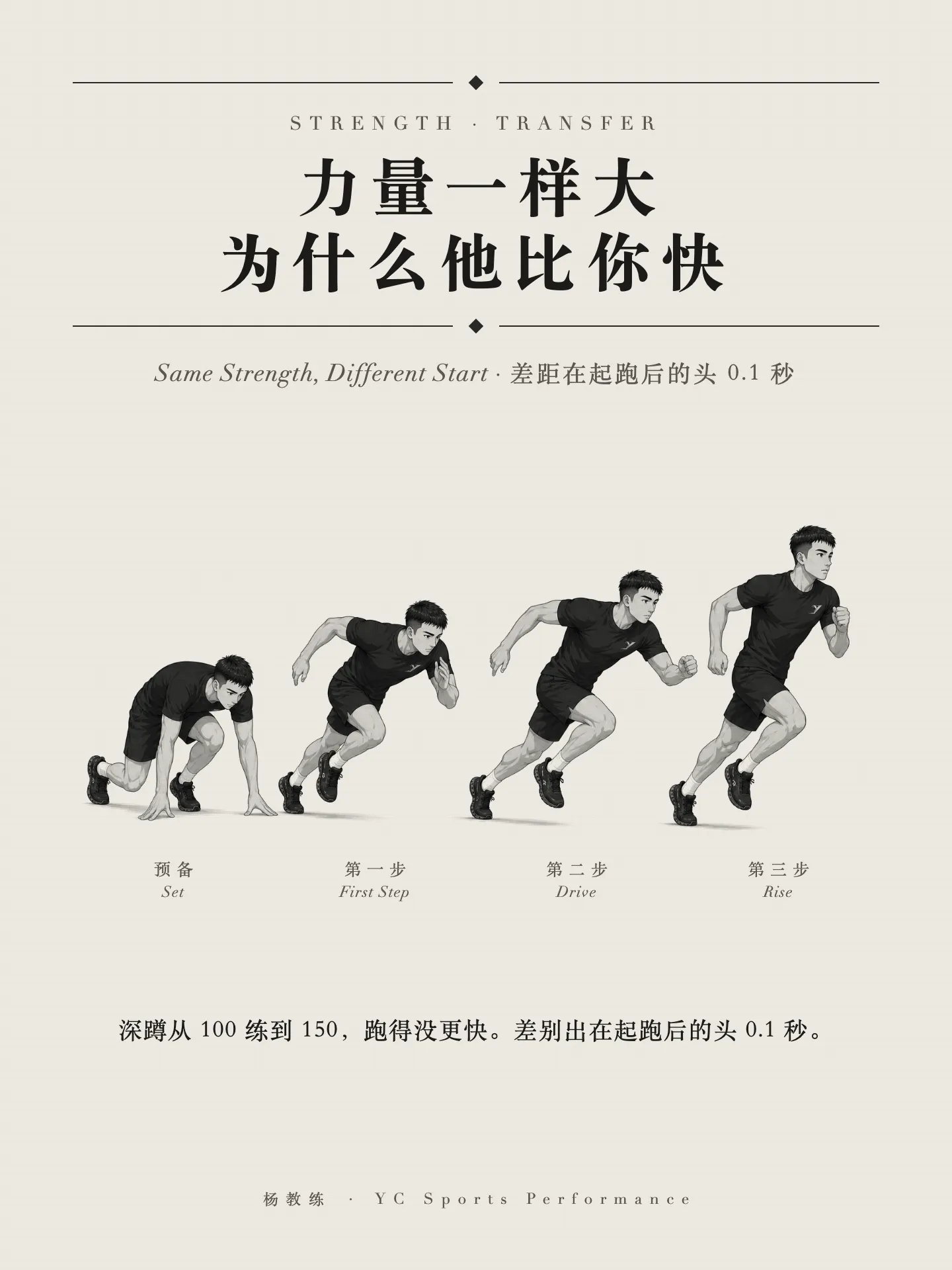

Many athletes have a very intuitive belief: if I take my squat from 100 kg to 150, I should run faster and jump higher. But what often happens in reality is different: strength keeps climbing, and speed doesn't noticeably change. Why?
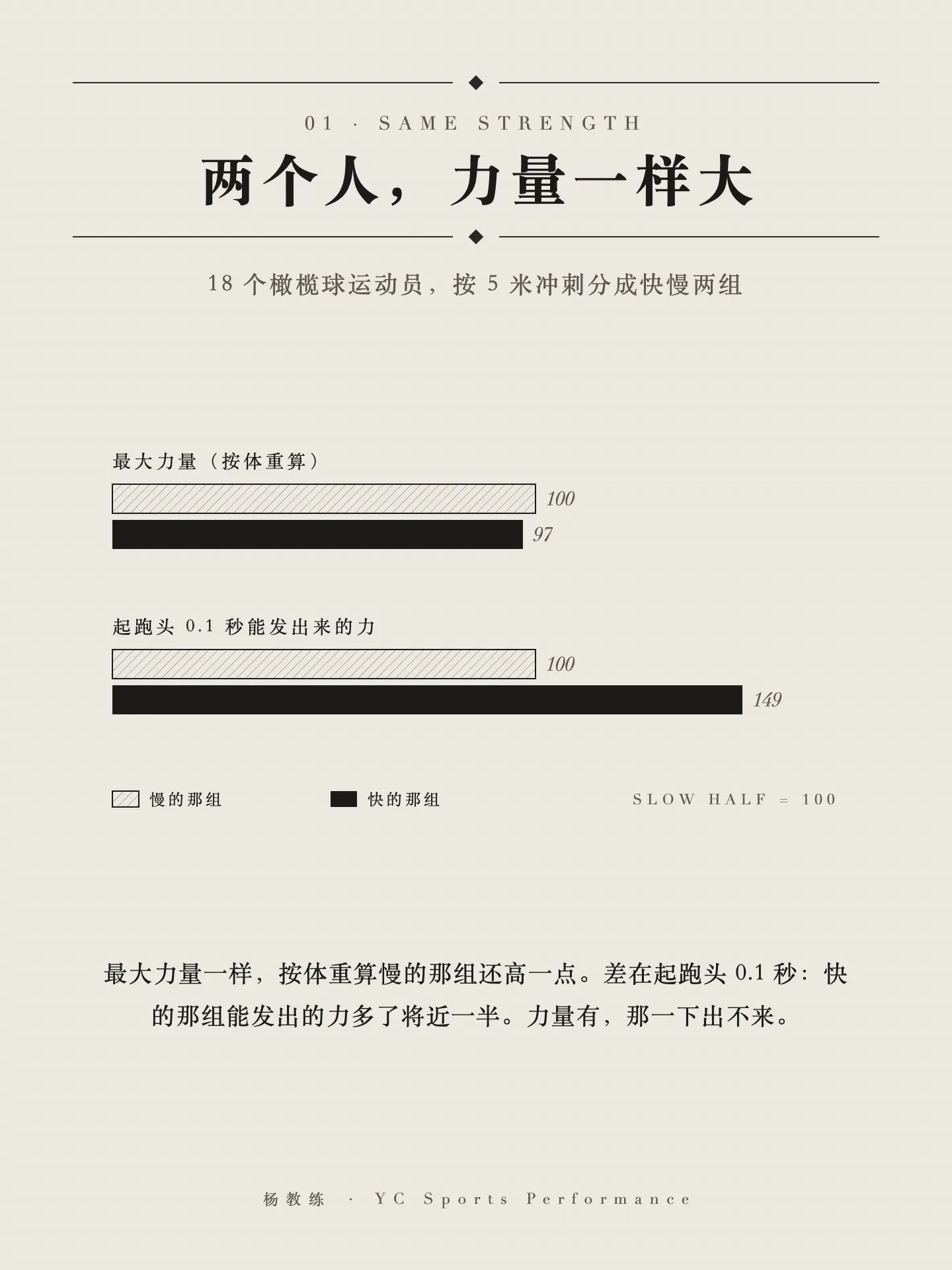
Take 18 rugby players whose maximal strength tested the same, and split them by 5 m sprint time into a faster half and a slower half. Relative to body weight, the slower half actually had slightly higher maximal strength. The difference was in the start: in the first 0.1 s after the start, the faster half could produce nearly half as much force again. The strength was there; they just couldn't express it in that first moment, and that's a different thing from how strong you are.
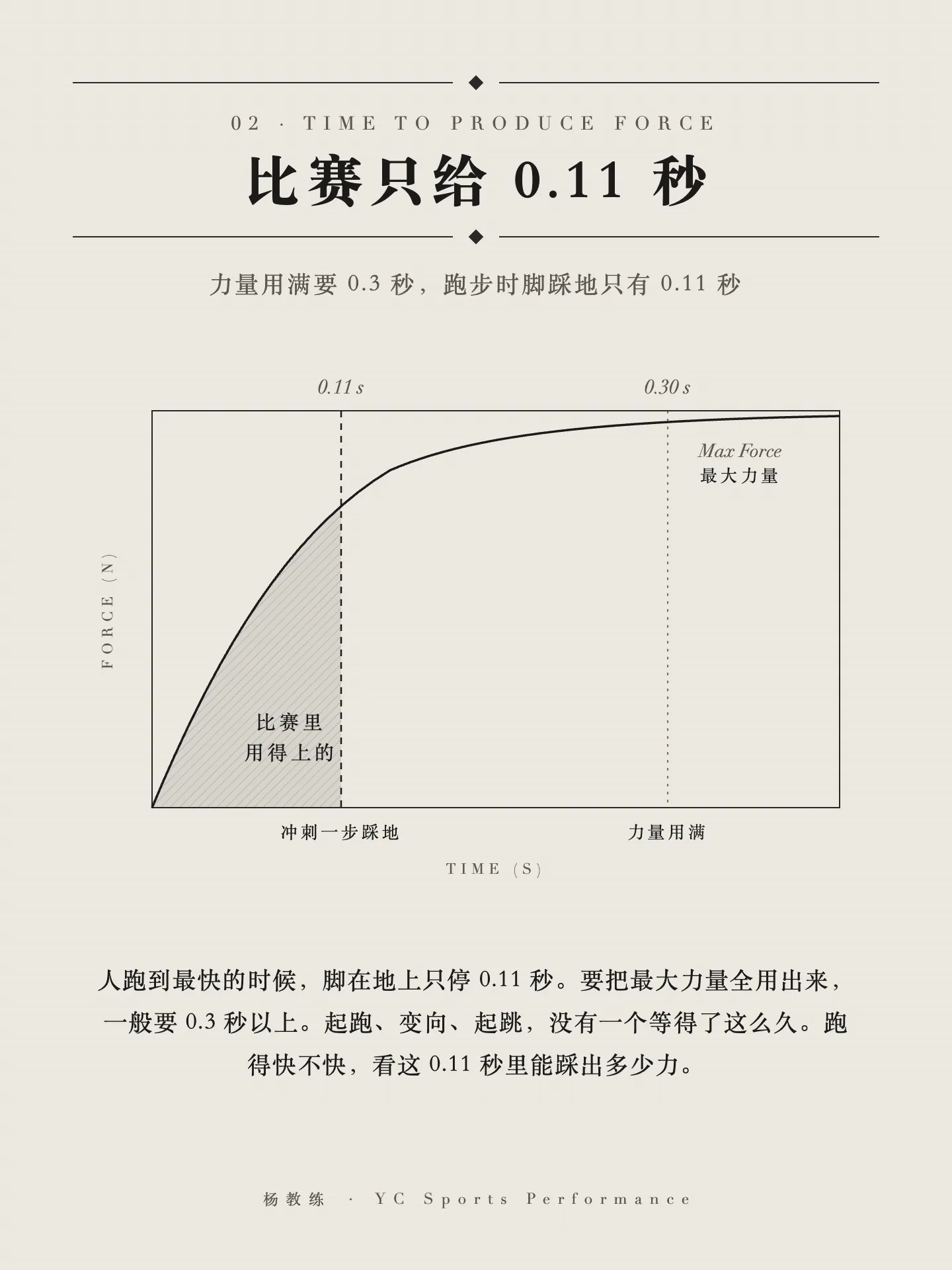
It doesn't come out because there isn't enough time. At top speed, your foot is on the ground for only 0.11 s. Using all of your maximal strength usually takes 0.3 s or more, and competition won't wait that long. How fast you run comes down to how much force you can put into the ground in those 0.11 s.
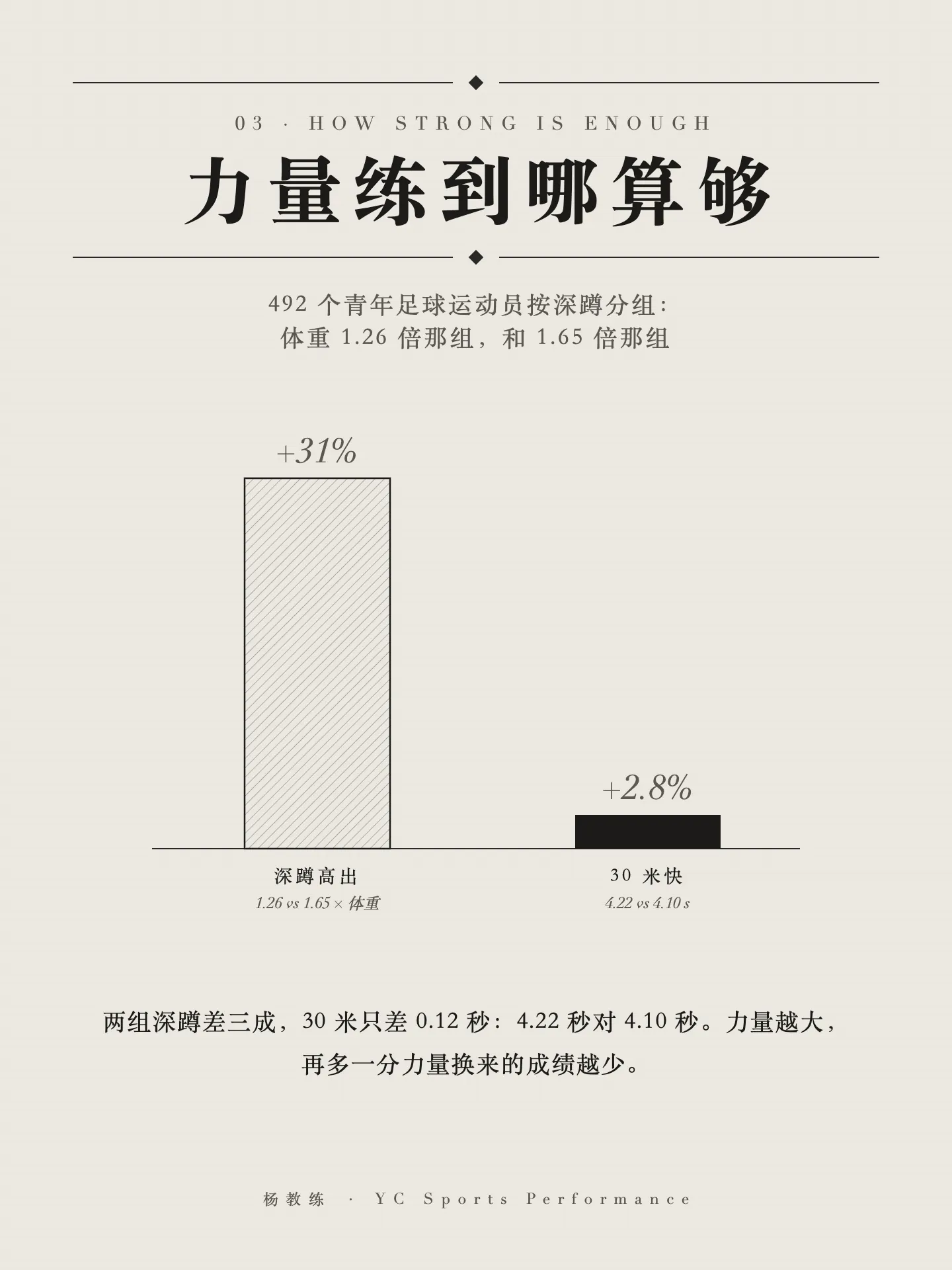
You definitely need to train strength. People who train strength sprint faster, by about 3% on average. But adding more has a ceiling. When 492 youth football players were grouped by squat, the group squatting 1.26 times body weight ran 30 m in 4.22 s, and the group squatting 1.65 times body weight ran it in 4.10 s. A squat about 30% stronger, and only 0.12 s faster over 30 m. The stronger you are, the less performance each extra bit of strength buys you.
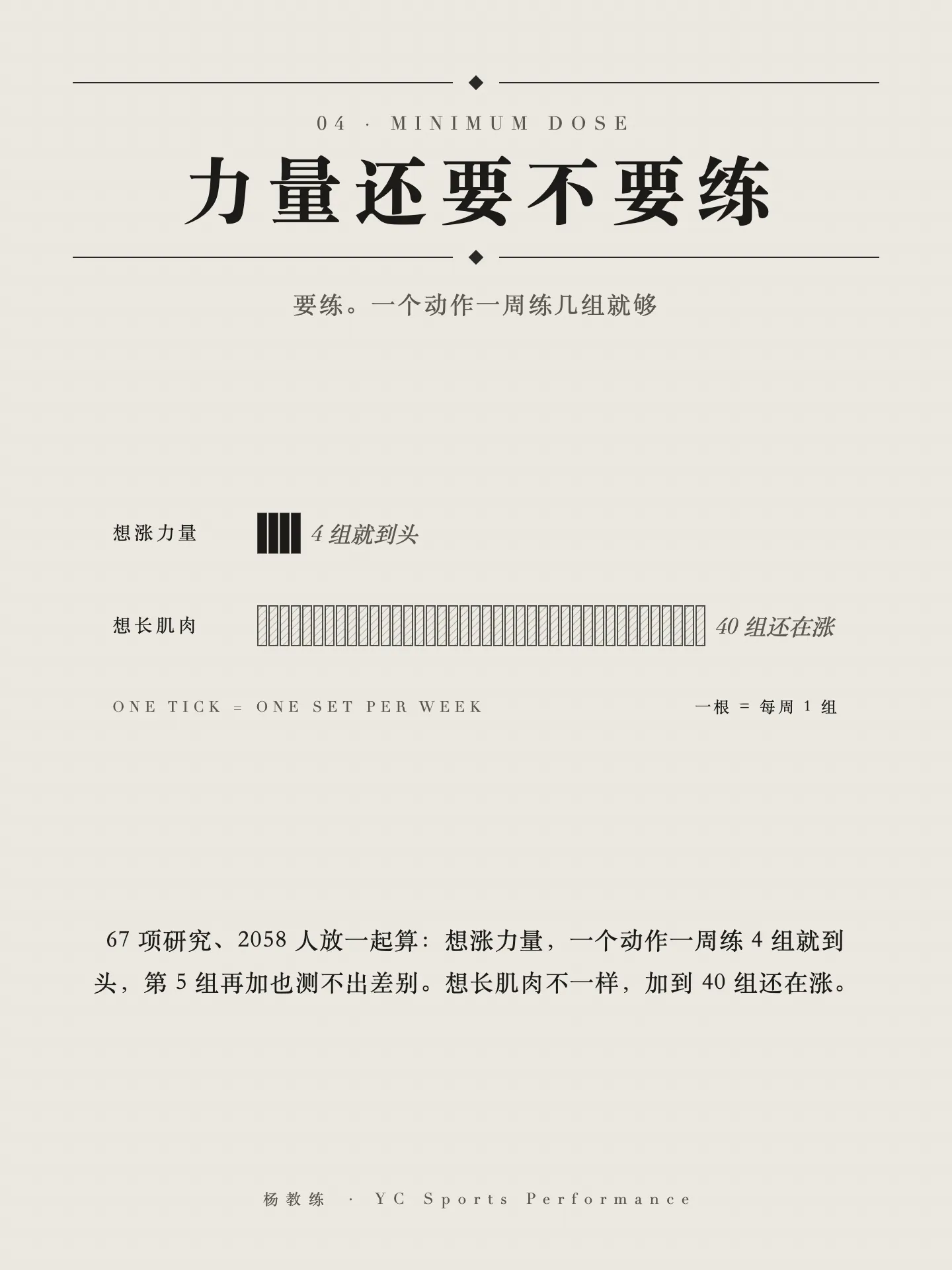
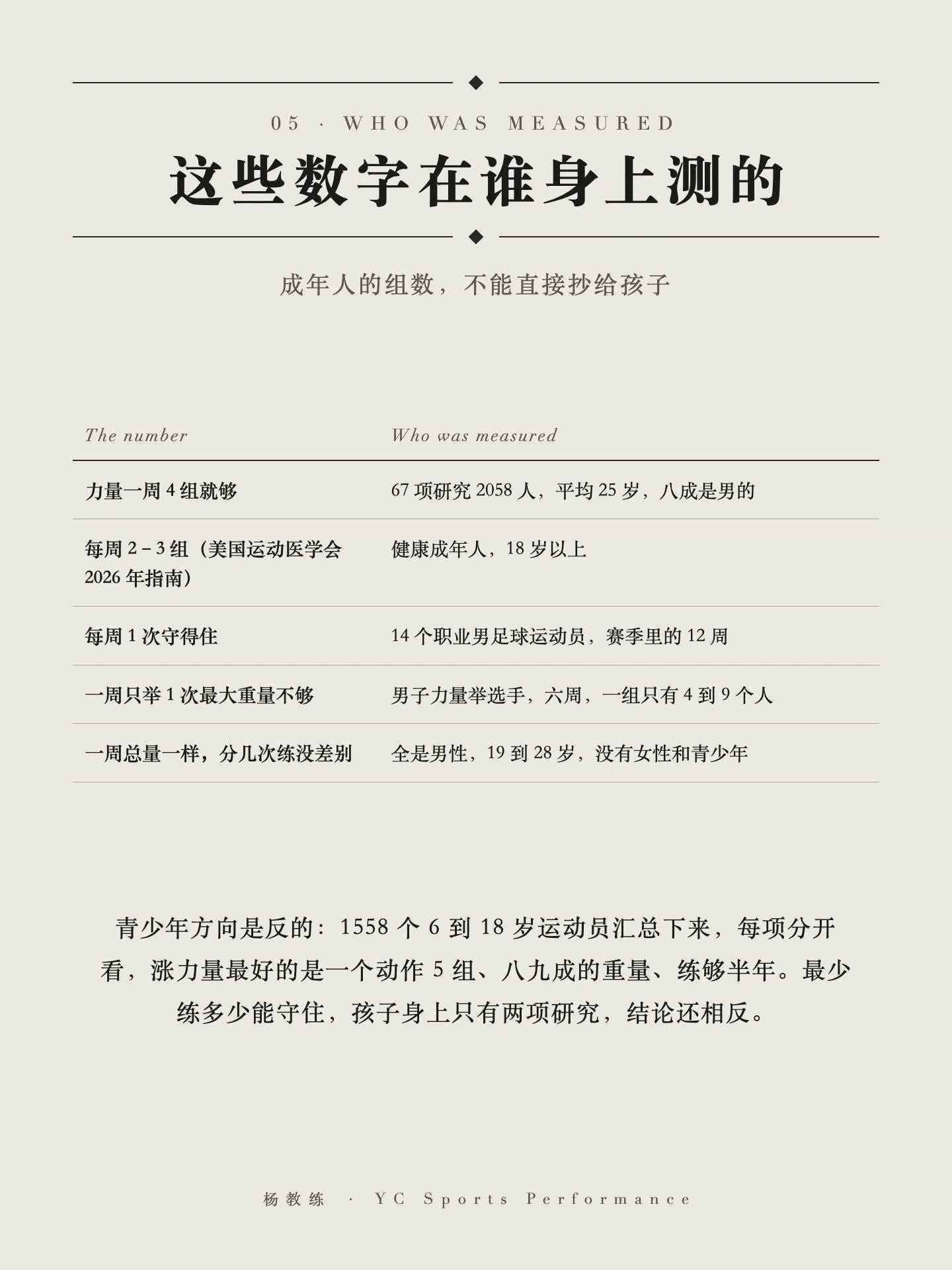
So should you still train strength? Yes, but ask a different question: what's the minimum training needed to hold on to the strength you have now? Pooling 67 studies and 2058 people: for building strength, gains top out at 4 sets per exercise per week, and a 5th set adds nothing measurable; building muscle is a different story, still increasing at 40 sets. 14 professional football players kept 1 strength session a week during the season, and after 12 weeks neither their strength nor their 40 m sprint had dropped at all; those who switched to 1 session every two weeks lost both. You can cut the sets, but not the weight.
All of these numbers come from adults. In young athletes it goes the other way: pooling 1558 athletes aged 6 to 18, the best strength gains came from 5 sets per exercise, at 80 to 90% loads, for a full six months. Adult set numbers can't simply be copied over to kids.
When should you shift focus? Four situations, see which one is you. Strength still rising steadily: keep going, your foundation isn't built yet, and this post doesn't apply to you. Strength has gone up but performance hasn't moved for months: set aside part of your time to train how fast you produce force, and train the movements of your own sport. In season: just maintain strength, keep one session a week, fewer sets, and don't drop the weight. Whichever one you are: retest every few weeks with the same method, and don't go by feel.
What do you squat, and what's your 30 m time? Tell me in the comments and I'll see which group you're in.
Back to all daily posts